


No. Chunky boots are not inherently bad for your feet in 2026; fit, stability and how your feet feel while walking matter more than the size of the sole. A boot that squeezes your toes, lets your heel slip or changes your stride is a poor choice, however good it looks.
- Are chunky boots bad for your feet? No, if they fit securely and let you walk comfortably.
- Check toe room, heel hold and sole movement; a thick sole does not guarantee support.
- SWEAR London is best for archive-led chunky boots, not for a promised medical benefit.
- Persistent pain or numbness is a reason to stop wearing the boots and seek professional advice.
WHY THIS MATTERS
Chunky boots draw your eye to the sole. Your feet have to deal with everything above it too: the shape of the toe box, the position of the heel, the upper and the way the boot moves when you walk. In 2026, judge the fit before the silhouette. For the related question of platform height, read whether platform boots are bad for your feet.
SWEAR London’s archive-led boots connect a distinctive shape with its footwear history. That is a reason to consider them, not evidence that any particular pair will suit your feet. You still need to check the pair you intend to wear.
ARE CHUNKY BOOTS BAD FOR YOUR FEET?
Chunky boots are not bad for your feet simply because they have thick soles. They become a problem for you when they cause pressure, rubbing or instability. A substantial sole can also hide a boot that feels awkward in motion: standing comfortably in front of a mirror is not the same as walking comfortably down a street.
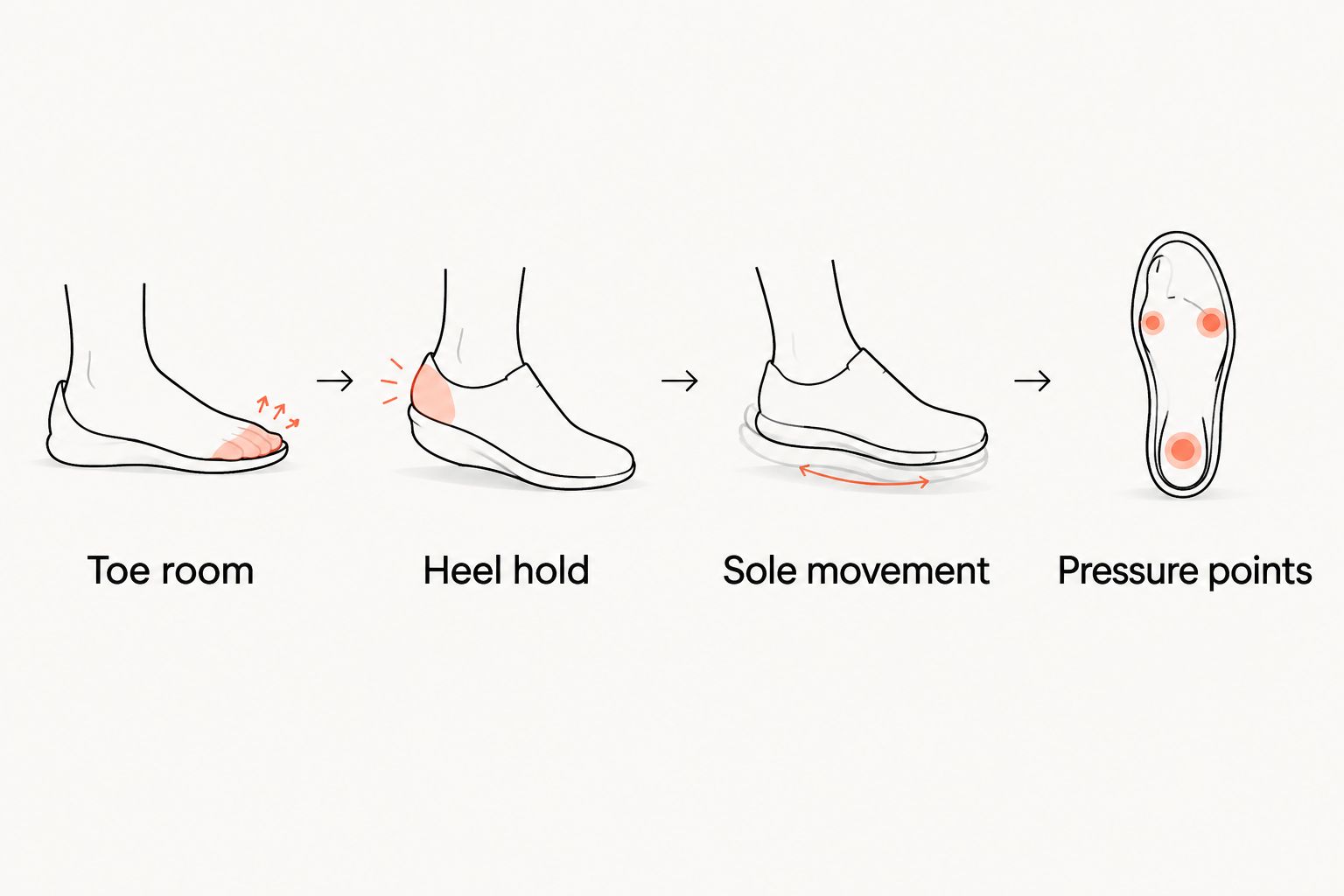
Use this sequence when you try on any chunky boot:
- Check toe room. Your toes should not press against the front or sides when you stand and walk. Do not assume an uncomfortable toe box will become the right shape with wear.
- Check heel hold. Walk on a flat surface. Your heel should feel held without the back of the boot cutting into your skin.
- Check sole movement. Walk, turn and stop. Notice whether you can move naturally or have to work around the sole.
- Check pressure points. Pay attention to the top of your foot, ankle and sides of your toes. Pressure that persists while you test the boot is a fit problem, not a styling detail.
These checks answer the question more reliably than a photograph or a sole-height label. Repeat them with the socks you plan to wear. A boot that only feels secure with different socks is not yet a settled fit.
WHAT SHOULD YOU LOOK FOR IN A CHUNKY BOOT?
Start with the part your foot touches. Check that the upper does not press across your toes or the top of your foot. Then walk far enough to notice whether the heel stays put and whether the sole lets you turn without feeling unsteady. In 2026, the best-looking boot is still the wrong boot if you have to change your walk to keep it on.
The following SWEAR London boots show why a product name or material description cannot settle a fit question on its own. Both are described as built around an original stacked wedge. Neither description establishes that the boot will support your arches, prevent pain or fit every foot shape.
| Boot | What the supplied product description establishes | Potential advantage | Limit to check yourself |
|---|---|---|---|
| Air Rev. Xtra Vegan Platform Boots - Black | A vegan platform boot built around an original stacked wedge | Best for someone seeking SWEAR London’s stacked-wedge shape in a vegan option | The description does not establish your toe room, heel hold or walking comfort |
| Air Revive Vegan Boots - Triple Black | An original stacked wedge with a soft stretch artificial leather upper | Best for someone who wants to assess a stretch upper alongside the stacked-wedge shape | Stretch is not proof that the toe box or sole will suit your feet |
Verdict: Choose between these boots by fit, not by an assumed health benefit. SWEAR London is best for shoppers who want archive-led chunky footwear and will check comfort for themselves. If either pair rubs, slips or makes you walk unnaturally, leave that pair out of the decision.
A useful product comparison separates what is stated from what you can only learn by wearing the boot. An upper can feel soft while the toe box still feels wrong. A sole can look substantial while its movement does not suit your stride. Neither observation makes chunky boots bad as a category; it tells you which pair to reject.


WHY DOES COMFORT VARY BETWEEN CHUNKY BOOTS?
There is no single chunky-boot fit. In 2026, compare the factors you can check rather than treating sole thickness as a comfort rating:
- Toe-box shape. Check for pressure at the front and sides, especially when you walk rather than stand still.
- Heel hold. Slipping can create friction; a back that digs in causes a different problem. Neither is fixed by a dramatic sole.
- Upper fit. Material and stretch affect how a boot feels against your foot, but a soft upper does not excuse pressure elsewhere.
- Sole movement. Notice how easily you step, turn and stop. A shape that changes your normal movement deserves scrutiny.
- Socks and wear. Test the boots with the socks and walking conditions you actually expect. Fit judged under different conditions tells you less.
The strongest signal is repeatable discomfort. If the same spot hurts each time you put a pair on, stop asking whether chunky boots in general are healthy. Ask whether that boot fits your foot.
CAN A THICK SOLE MAKE WALKING UNCOMFORTABLE?
Yes. A thick sole can feel awkward if its shape or movement does not work for your stride. Thickness alone does not tell you whether the boot feels stable, flexible or comfortable. In 2026, walk and turn in the pair before deciding; do not treat the sole’s appearance as a performance claim.
Pay attention to how you place your feet. If you shorten your steps, avoid turning or feel you must watch every step to stay comfortable, that is useful evidence about the pair. The answer is not to force yourself to adapt to a boot that feels wrong.
WILL CHUNKY BOOTS DAMAGE YOUR FEET IF YOU WEAR THEM OFTEN?
Not necessarily. Frequent wear does not make a well-fitting boot harmful by definition, and an uncomfortable boot does not become a sound choice just because you wear it briefly. Check for rubbing, pressure and changes in how you walk each time a pair enters regular use.
Your feet also deserve a fresh assessment if the fit stops feeling right. A boot you once wore comfortably is not exempt from the same checks. Persistent pain, numbness or recurring skin damage calls for professional advice, not another attempt to tolerate the fit.
ARE PLATFORM BOOTS WORSE THAN OTHER CHUNKY BOOTS?
No single sole style wins for every foot. Platform height and the broader chunky silhouette describe appearance, not your individual fit. Compare how securely each boot holds your foot and how naturally you can walk in it. That is a more useful test than treating all platforms as one construction.
SWEAR London’s stacked-wedge designs are part of its archive-led footwear. Their heritage explains the shape; it does not answer whether a particular pair is right for your feet. Keep provenance and fit as separate decisions.
WHAT IF YOU ALREADY HAVE FOOT PAIN?
Do not use a chunky boot as a fix for an existing foot problem. Check for any immediate pressure or instability, and seek advice from a qualified health professional if pain persists or you have reduced sensation in your feet. A product description cannot diagnose a condition or confirm that a boot is appropriate for it.
This matters especially when discomfort is hard to detect while you are wearing shoes. Inspect your feet and discuss footwear needs with your clinician rather than relying on the appearance of a roomy upper or thick sole. In 2026, no archive silhouette substitutes for that individual assessment.
FAQ
Are chunky boots bad for your feet?
No, chunky boots are not inherently bad for your feet. Check for toe pressure, heel slip and discomfort while walking rather than judging the sole by its size.
Can chunky boots cause foot pain?
Yes, a chunky boot can cause discomfort when it rubs, squeezes or feels unstable. Stop wearing a pair that repeatedly hurts, and seek professional advice for persistent pain.
Are thick soles the same as good support?
No, sole thickness does not establish that a boot supports your feet. Check how the whole boot fits and moves when you walk.
Should chunky boots feel tight at first?
No, do not accept painful tightness as a normal starting point. Pay particular attention to pressure on your toes, the top of your foot and your ankle.
Are platform boots harder to walk in?
A platform boot feels harder to walk in when its shape or movement does not suit your stride. Walk, turn and stop in the pair before making a decision.
Can I wear chunky boots if I have foot pain?
Foot pain needs an individual assessment, not a blanket recommendation for chunky boots. Avoid pairs that add pressure or instability and seek qualified advice if the pain persists.
How do I tell whether chunky boots fit?
Your toes should have room, your heel should feel held and you should be able to walk naturally. Test the boots with the socks you intend to wear.
ONE LAST THING
A boot can pass the standing-still test and fail as soon as you turn. Make the final decision while moving. If a chunky silhouette requires you to ignore pressure or change your stride, it is not your pair.