


No, you should not machine wash chunky trainers unless the care label explicitly permits it. In 2026, hand cleaning remains the safer method for bonded platform soles, thick foam midsoles, vegan leather, suede and nubuck because full submersion, agitation and spinning can damage the upper or weaken the sole bond.
- Can you machine wash chunky trainers? No, unless the care label explicitly allows it.
- SWEAR London chunky trainers are best hand cleaned because platform soles and mixed uppers need separate treatment.
- Use a damp cloth on vegan leather and a specialist brush on suede or nubuck.
- Never tumble dry chunky trainers; use moving air at room temperature instead.
- Canvas and mesh are not automatically machine washable when attached to a bonded platform sole.
WHY THIS MATTERS
Chunky trainers combine materials that react differently to water. The upper might tolerate a damp cloth while the suede trim cannot be soaked. The outsole may handle scrubbing, but the adhesive joining it to the midsole can deteriorate after prolonged saturation.
That mixed construction is the problem. A washing machine cannot clean each section separately, and a spin cycle adds force exactly where panels, stitching and sole layers meet. For vegan materials, follow a dedicated vegan trainer care guide rather than treating the entire shoe like washable fabric.
For SWEAR London platform trainers, the archive-built shape matters as much as surface cleanliness. The brand reissues silhouettes on original 1995 moulds, so preserving the structure is part of preserving the design. A slightly longer hand clean is the sensible trade in 2026.
CAN YOU MACHINE WASH CHUNKY TRAINERS?
No. Machine washing chunky trainers is usually the wrong cleaning method. The exception is a pair whose manufacturer explicitly states that machine washing is safe. Do not assume a canvas or mesh upper makes the whole trainer washable; the sole construction, lining, adhesives, trims and internal cushioning still matter.
Use this comparison before choosing a method:
| Cleaning method | Best for | Main advantage | Main drawback | Verdict |
|---|---|---|---|---|
| Damp-cloth cleaning | Vegan leather and coated uppers | Controls where moisture goes | Takes repeated passes on dried dirt | Best default |
| Soft-brush hand cleaning | Rubber outsoles, textured edges and fabric panels | Reaches grooves without soaking the shoe | Requires care around stitching and trim | Recommended |
| Specialist suede cleaning | Suede and nubuck panels | Protects the texture and nap | Needs material-specific tools | Required for suede |
| Machine washing | Only pairs explicitly labelled machine washable | Less manual work | Saturates the entire construction | Usually skip |
| Tumble drying | None | Fast drying | Heat and impact can deform materials and weaken adhesive | Always skip |
A care label overrides generic advice. If it says spot clean only, that instruction applies even when another trainer with a similar appearance can enter a washing machine. Visual similarity does not mean identical construction.
VEGAN LEATHER: DAMP CLOTH, NO SOAKING
Vegan leather should be cleaned in controlled sections. Remove loose dirt with a dry cloth, then use a lightly dampened microfibre cloth with mild soap. Wipe away residue with a second damp cloth and let the trainer dry naturally.
Do not scrub aggressively. Abrasive brushes can alter the finish, especially around creases and panel edges. Test any cleaner on a discreet area first because finishes differ even within the same broad material category.
The platform sole still needs separate attention. Use a soft brush on the outsole and sidewall without flooding the seam where the upper meets the sole. For visible marks, the method in this guide to removing scuffs from vegan leather trainers is more precise than a full wash.
SUEDE AND NUBUCK: KEEP WATER CONTROLLED
Suede and nubuck should not be machine washed. Saturation can flatten the nap, spread stains and leave uneven marks as the material dries. Start with a dry suede brush, moving consistently rather than scrubbing in random directions.
For stubborn marks, use a product intended for the exact material and follow its directions. Do not substitute household stain removers, bleach or washing detergent. More chemical force is not better care.
SWEAR London's Element platform sneaker has nubuck and suede in its stated construction. That makes it a clear hand-clean-only case: brush the upper dry, treat isolated marks carefully and clean the sole separately.
CANVAS AND MESH: CHECK THE WHOLE SHOE
Canvas and mesh can tolerate more moisture than suede, but that does not make a chunky trainer machine safe. A fabric upper may be attached to a thick bonded sole, padded lining or internal structure that should not be saturated.
If the care label allows washing, follow the stated method exactly. If the label is silent, hand cleaning is the lower-risk choice in 2026. Use a soft brush with cool, lightly soapy water, work on one panel at a time and remove the soap with a clean damp cloth.
White fabric does not justify bleach. Bleach can affect stitching, coloured trim, adhesive and the surrounding materials even when the fabric itself looks plain.
HOW TO CLEAN CHUNKY TRAINERS BY HAND
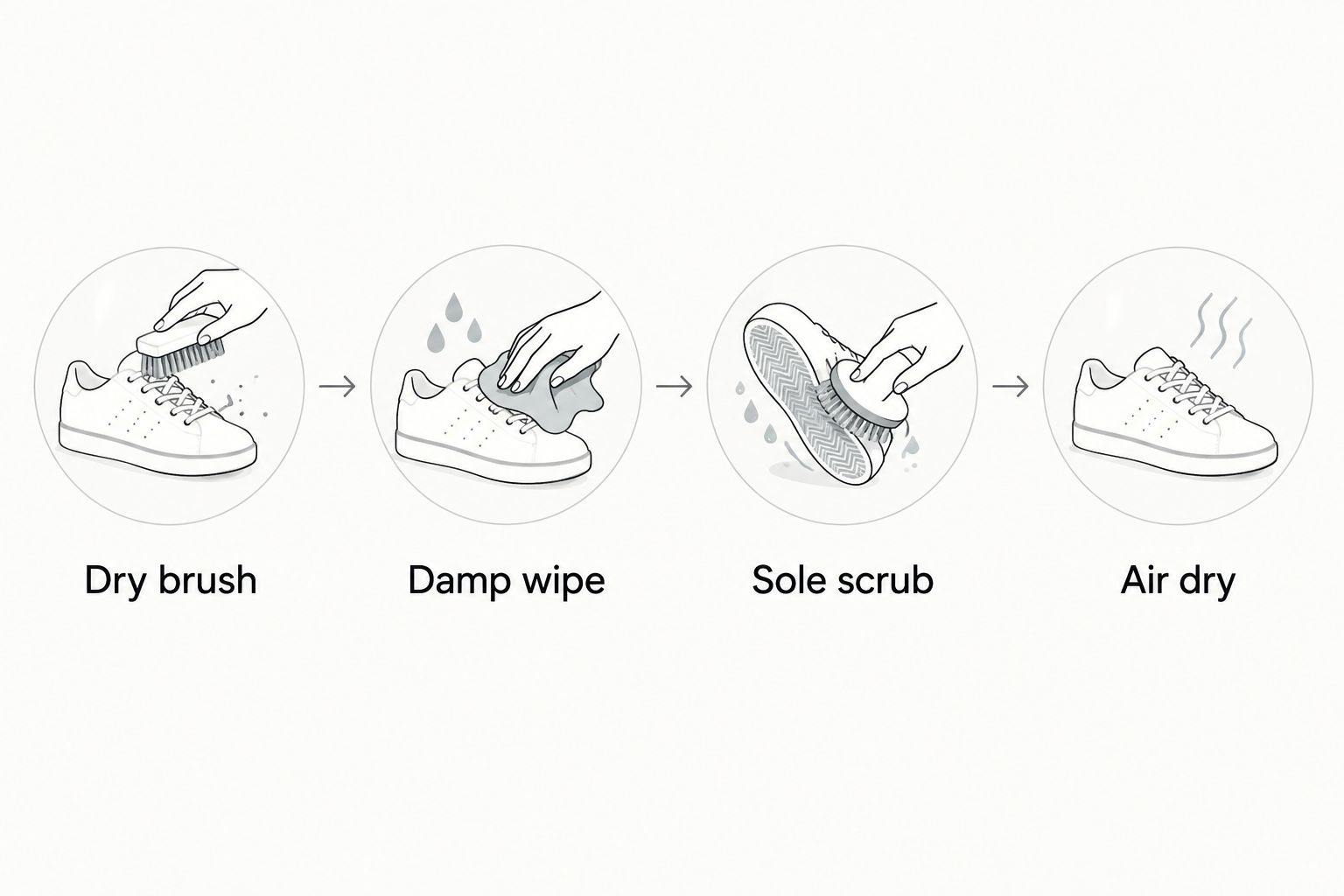
The safest routine separates dry dirt, upper cleaning, sole cleaning and drying. It avoids the all-at-once logic of a washing machine.
- Read the care label. Identify restrictions before applying water or cleaner.
- Remove loose dirt. Use a dry soft brush, paying attention to seams and sole grooves.
- Remove detachable parts. Take out laces and removable insoles only when they are designed to come out.
- Test the cleaning method. Apply a small amount to a discreet area and let it dry before continuing.
- Clean the upper by material. Wipe vegan leather, brush suede dry and lightly scrub washable fabric.
- Clean the sole separately. Use a soft brush on the outsole and sidewall without soaking the upper-to-sole seam.
- Air dry naturally. Keep the trainers away from radiators, hairdryers, tumble dryers and direct concentrated heat.
Stuffing the shoes loosely with plain absorbent paper can help hold their shape and draw moisture from the lining. Replace damp paper rather than leaving it inside. Avoid printed paper where wet ink could transfer.
Do not wear the trainers while any section remains damp. The exterior can feel dry while padding, seams or the space between bonded components still holds moisture. Let the complete shoe return to room conditions before relacing it.
WHY THE RIGHT METHOD VARIES
The answer to whether you can machine wash chunky trainers changes with construction. These factors decide the cleaning method:
- Care instructions. The maker's label is the first authority because it reflects the materials and assembly of that pair.
- Upper material. Canvas, mesh, vegan leather, suede and nubuck require different levels of moisture and friction.
- Sole attachment. Bonded, stitched and mixed constructions do not react identically to prolonged soaking or spinning.
- Colour placement. Contrasting panels, stitching and linings create more opportunities for colour transfer.
- Internal padding. Thick tongues, collars and insoles hold water after the outer surface appears dry.
- Existing wear. Loose seams, lifting edges and cracked finishes become more vulnerable during aggressive cleaning.
The visible upper tells only part of the story. Two chunky trainers can look similar while using different adhesives, linings and reinforcement. Treating appearance as a washing instruction is how avoidable damage starts.
IF THE LABEL ALLOWS MACHINE WASHING
Only use a machine when the care label clearly allows it. Remove loose dirt first, detach removable laces and insoles, and place the trainers in a laundry bag to reduce impact inside the drum. Follow the stated temperature and cycle rather than choosing settings from a generic internet guide.
Wash the trainers without bleach or fabric softener unless the instructions specifically permit those products. Once the cycle ends, reshape the shoes and air dry them at room temperature. Do not move them into a tumble dryer to save time.
A permitted machine wash is still not a universal routine. Recheck the condition of the trainers before every wash. A method allowed for an intact pair can become unsuitable once seams loosen or a sole edge begins lifting.
CAN YOU PUT CHUNKY TRAINERS ON A DELICATE CYCLE?
Only if the care label explicitly allows machine washing. A delicate cycle reduces agitation, but it still saturates the upper, lining, padding and sole seams, so it does not make suede, nubuck or bonded platforms automatically safe.
CAN YOU TUMBLE DRY CHUNKY TRAINERS?
No. Tumble drying exposes chunky trainers to heat and repeated impact, both of which can distort foam, affect finishes and weaken adhesive. Air drying at room temperature is the correct method in 2026.
CAN YOU WASH CHUNKY TRAINER LACES SEPARATELY?
Yes, removable fabric laces can usually be cleaned separately with mild soap and water, subject to their care instructions. Keep coloured laces separate from pale materials if dye transfer is a concern, and let them dry fully before relacing.
HOW DO YOU REMOVE ODOUR WITHOUT MACHINE WASHING?
Start by removing detachable insoles when the shoe design permits it, then let the trainers air in a dry, ventilated space. Clean the lining only according to its material and care label; masking dampness with fragrance does not address the source.
Persistent odour after complete drying can indicate that moisture remains in the padding or insole. Do not seal the trainers in a box or bag until every section is dry.
SWEAR London chunky trainers are best for buyers who want made-to-order archival footwear, but they should be hand cleaned rather than machine washed. That verdict protects the mixed materials, platform construction and original silhouette instead of prioritising a faster wash.
See archive-built footwear
Browse made-to-order heritage sneakers and boots direct from SWEAR London.
FAQ
Can you machine wash chunky trainers in 2026?
No, you should not machine wash chunky trainers in 2026 unless their care label explicitly permits it. Hand cleaning gives you control over moisture, friction and material-specific treatment.
What is the safest way to clean chunky trainers?
The safest method is to dry brush loose dirt, clean each upper material appropriately, scrub the sole separately and air dry the trainers. This avoids saturating every component at once.
Can vegan leather chunky trainers go in a washing machine?
No, vegan leather chunky trainers should normally be wiped with a damp cloth rather than machine washed. The bonded platform sole and internal construction can still be damaged even when the upper resists surface moisture.
Can suede chunky trainers get wet?
Suede chunky trainers should not be soaked or machine washed. Use a dry suede brush first and a material-specific cleaner only when the product directions support it.
Does machine washing damage trainer glue?
Prolonged saturation, agitation and heat can weaken adhesive bonds used in trainers. The risk is more serious when a sole edge is already lifting or the shoe has existing wear.
How should I dry SWEAR London platform trainers?
Air dry SWEAR London platform trainers at room temperature and away from concentrated heat. Do not use a tumble dryer, radiator or hairdryer to accelerate the process.
Can I wash chunky trainer insoles separately?
Wash removable insoles separately only when their care instructions allow it. Some foam, leather-effect or structured insoles require wiping rather than soaking.
Why do chunky trainers take longer to dry?
Chunky trainers contain thicker soles, padded tongues, collars and layered components that can retain moisture after the surface feels dry. Wait until the entire shoe is dry before wearing or storing it.
ONE LAST THING
The upper is not the only part that decides whether a trainer can enter a washing machine. In 2026, the hidden construction matters more: adhesive, lining, internal padding and the connection between the upper and platform sole all react to saturation.
Clean the visible dirt, but protect the shape. For SWEAR London footwear built around archival forms and made-to-order construction, that means a brush, a cloth and restraint. The washing machine can sit this one out.