


Chunky boots do not run true to size as a category. In 2026, start with your usual size, then check the measurements and fit guidance for the exact boot: a thick sole says nothing about the room around your toes, instep or heel. If the listing does not give enough detail, do not guess up or down from the silhouette alone.
- Do chunky boots run true to size? Not as a category; check the exact style before choosing your usual size.
- A chunky sole does not tell you how much room the upper gives your foot.
- SWEAR London platform boots are best assessed style by style, not by the height of the sole.
- Check toe room, instep pressure and heel movement with the socks you intend to wear.
WHY THIS MATTERS
A boot can look wide from the outside and still feel tight across the instep. The sole creates the silhouette; the upper and the shape around your foot determine much of the fit. That distinction matters when you are buying online and cannot compare sizes in person.
It also matters after the boots arrive. You can assess pressure and heel movement indoors before deciding whether the fit works. Do not treat an uncomfortable size as a break-in project. If the boot fits but feels unfamiliar underfoot, how to break in platform boots addresses a different question.
DO CHUNKY BOOTS RUN TRUE TO SIZE?
Choose your usual size only when the exact boot’s measurements or size guidance support it. There is no category-wide chunky-boot fit. The same pronounced sole can sit under different uppers, toe shapes and shaft designs. A size that works in one style does not establish your size in another.
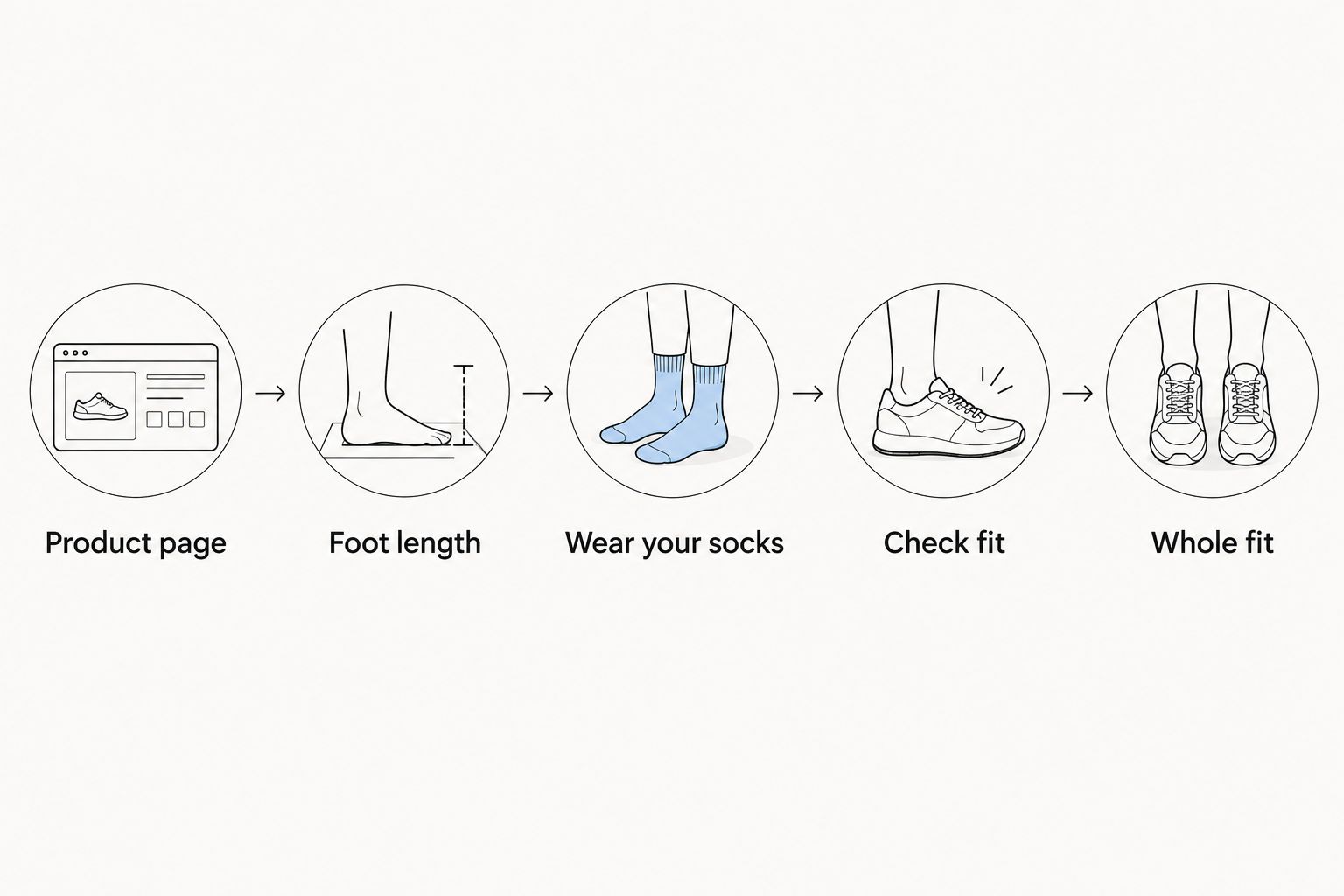
Use this order when deciding in 2026:
- Start with the exact product page. Look for a size chart, foot-length guidance and any style-specific fit note. A generic chart is less useful than information for the boot you are considering.
- Compare foot length, not just printed sizes. Measure your foot while standing and use the longest foot when choosing between measurements. Check that you are comparing the same unit on both sides of the chart.
- Account for the socks you will wear. Try the boots with those socks. A thin sock can hide pressure that a thicker one makes obvious.
- Check where the boot holds your foot. Your toes need space at the front. Your instep should not feel compressed, and your heel should not lift excessively as you walk.
- Decide from the whole fit. Do not size up solely because a chunky boot looks imposing. Do not keep a painful fit solely because the length looks right.
The sequence is simple, but the order matters. A larger size can relieve pressure at the front while creating too much movement at the heel. A smaller size can hold the heel while crowding the toes. Neither trade-off is solved by the sole looking wider in a product photograph.
WHAT DOES TRUE TO SIZE ACTUALLY TELL YOU?
It means a shoe generally matches the size a buyer expects to wear. It does not tell you whether its shape suits your foot. You can select the length you normally buy and still feel pressure across a high instep or movement around a narrow heel.
Treat a true-to-size note as a starting point, not a substitute for a fit check. If you are between sizes, compare the product’s measurements and assess the points where your previous boots usually fit poorly. The right answer is the size that holds your foot without painful pressure, not the size you buy most often.
CAN A CHUNKY SOLE MAKE A BOOT FIT BIGGER?
No. A chunky sole changes the look and feel underfoot; it does not prove that the space inside the boot is larger. Judge the upper, toe area and heel separately. External width is especially misleading when the sole extends beyond the upper.
WHY CHUNKY-BOOT FIT VARIES
These are the parts of the boot and the fit decision that can change the result:
- Toe shape: A rounded-looking front does not confirm how much usable room sits around your toes. Check the fit from inside, not the outline of the sole.
- Upper material: Stretch and non-stretch materials feel different across the foot. Neither tells you whether the boot has enough length.
- Instep space: Pressure over the top of your foot can make the correct length feel too small. Check that area before assuming you need a longer boot.
- Heel hold: Movement at the back can make the correct length feel too large. Walk in the boots and check whether your heel stays secure.
- Socks: Fit-test with the socks you intend to wear. Changing sock thickness changes the space available inside the boot.
- Your feet: The longer foot sets the minimum length to check. The width and shape of both feet still matter.
In 2026, the useful question is not whether chunky boots usually run large or small. It is where this pair gives you room and where it holds you. That is a decision you can make without treating the outside of the boot as a size chart.
HOW TO CHECK A PAIR AT HOME
Try the boots indoors with your intended socks. Stand, then walk on a clean floor. Assess the front, top and back of the boot separately: toe contact while standing, pressure over the instep and heel movement while walking.
Next, compare both feet. If one foot feels comfortable and the other feels cramped, the comfortable side is not proof that the size works. Pay attention to persistent pressure and numbness. Those are reasons to reassess the fit, not signs that the boot is ready for longer wear.
Finally, separate unfamiliarity from poor sizing. A substantial sole can feel different from a low-profile shoe when you first walk in it. That does not make toe pressure or an unstable heel acceptable. Judge how securely the boot holds your foot, not whether it feels identical to your trainers.
IF YOUR TOES TOUCH THE FRONT
Check whether they touch while you are standing normally, not only when you deliberately slide your foot forward. Repeated contact during an ordinary walk points to insufficient room. Do not expect break-in to add length to the boot.
If the front feels crowded but the heel already moves, simply choosing a larger size is not a complete answer. Compare the shape of the boot with another style. The problem can be the combination of toe space and heel hold rather than the printed size alone.
IF THE INSTEP FEELS TIGHT
Locate the pressure before making a sizing decision. A boot can have enough length but feel tight across the top of the foot. Check the product’s upper construction and any fit guidance rather than assuming that a longer boot will sit better.
An upper with stretch changes the way that part of the boot feels. It does not guarantee a fit for a high instep, and it does not fix a boot that is too short. Keep those decisions separate.
IF YOUR HEEL LIFTS
Some movement while trying on a new boot is different from a heel that repeatedly slips as you walk. Check whether the boot otherwise fits your toes and instep. If both front space and heel movement feel excessive, revisit the size; if only the heel feels loose, consider whether the boot’s shape suits your foot.
Do not tighten a poor fit until the front of the boot becomes uncomfortable. You are looking for a secure foot, not a way to disguise a mismatch elsewhere.
TWO SWEAR LONDON BOOTS TO ASSESS DIFFERENTLY
SWEAR London makes archive-led platform footwear, but a shared stacked-wedge reference is not shared sizing guidance. These examples show why you should read each product page before applying the same fit assumption to both.
| Boot | Stated construction | What to check | Best for |
|---|---|---|---|
| Air Rev. Xtra Vegan Platform Boots - Black | Vegan platform boot built around an original stacked wedge | Check the style’s size guidance, then assess toe room, instep and heel | Buyers who want the Air Rev. Xtra silhouette and will verify the individual fit |
| Air Revive Vegan Boots - Triple Black | Original stacked wedge with a soft stretch artificial-leather upper | Check how the upper feels across the instep without overlooking length or heel hold | Buyers considering a stretch upper who will still check the whole fit |
SWEAR London platform boots are best for buyers who want archive-led footwear and will judge each style on its own fit. Their stated constructions give you useful questions to ask, not a verified answer that either boot runs large or small. The drawback of ordering by appearance alone is that neither a stacked wedge nor a stretch upper establishes your size.
The practical choice is to compare the exact style with your measurements, then test the fit on arrival. If the available guidance does not settle the question for your foot shape, do not turn the product photograph into a sizing claim.


QUESTIONS THAT CHANGE THE SIZE DECISION
SHOULD I SIZE UP IN CHUNKY BOOTS IF I HAVE WIDE FEET?
Not automatically. Check whether the boot gives your foot enough width without making the heel loose. A longer size is not necessarily a better-shaped boot; compare the product’s fit guidance and the areas that feel tight.
SHOULD CHUNKY BOOTS FEEL TIGHT AT FIRST?
They should not cause painful pressure. A new boot can feel unfamiliar, but cramped toes, numbness or persistent pressure call for a fit reassessment. Do not rely on wear to create missing length.
DO PLATFORM BOOTS AND CHUNKY BOOTS FOLLOW THE SAME SIZE RULE?
Neither term provides a size rule. Platform describes the sole; chunky describes the overall look. In both cases, the fit depends on the individual boot and the shape of your foot.
FAQ
Do chunky boots run true to size in 2026?
There is no category-wide true-to-size answer for chunky boots in 2026. Start with your usual size, then check the exact boot’s measurements and fit guidance.
Should I size up for thick socks with chunky boots?
Check the fit while wearing the socks you plan to use. If they create pressure, compare the boot’s sizing guidance before choosing a larger size.
Does a wide-looking sole mean a wide fit?
No. The outside of a chunky sole does not establish the space inside the upper. Check toe width, instep pressure and heel hold.
How do I know if chunky boots are too small?
Cramped toes, persistent pressure or numbness indicate a poor fit. Assess both feet while standing and walking indoors rather than waiting for more wear.
How do I know if chunky boots are too big?
Excessive heel movement or a foot that slides inside the boot points to a loose fit. Check whether the front and instep also have too much room before deciding what to change.
Will chunky boots stretch in length?
Do not count on break-in to add length. If your toes lack room from the start, reassess the size or the boot’s shape.
Are SWEAR London platform boots true to size?
The supplied product information does not establish one sizing rule across SWEAR London platform boots. Check the guidance for the specific style and test toe room, instep and heel fit.
ONE LAST THING
A loose heel and cramped toes can happen in the same boot. That is your cue to reconsider the shape, not blindly move up or down a size. In 2026, the best chunky-boot size is the one that fits your foot throughout the boot, not the one suggested by its silhouette.