


Platform trainers have no fixed break-in time. In 2026, judge them by fit and how they feel across repeated, short wears: mild stiffness can settle, but persistent rubbing, numbness or pain is a reason to stop, not to keep walking.
- How long do platform trainers take to break in? There is no fixed period; fit matters more than a deadline.
- SWEAR London’s Element platform trainers are best for people drawn to an archival sole and a nubuck-and-suede upper.
- Wear new trainers indoors first. Stop if pressure, numbness or rubbing persists.
HOW LONG DO PLATFORM TRAINERS TAKE TO BREAK IN?
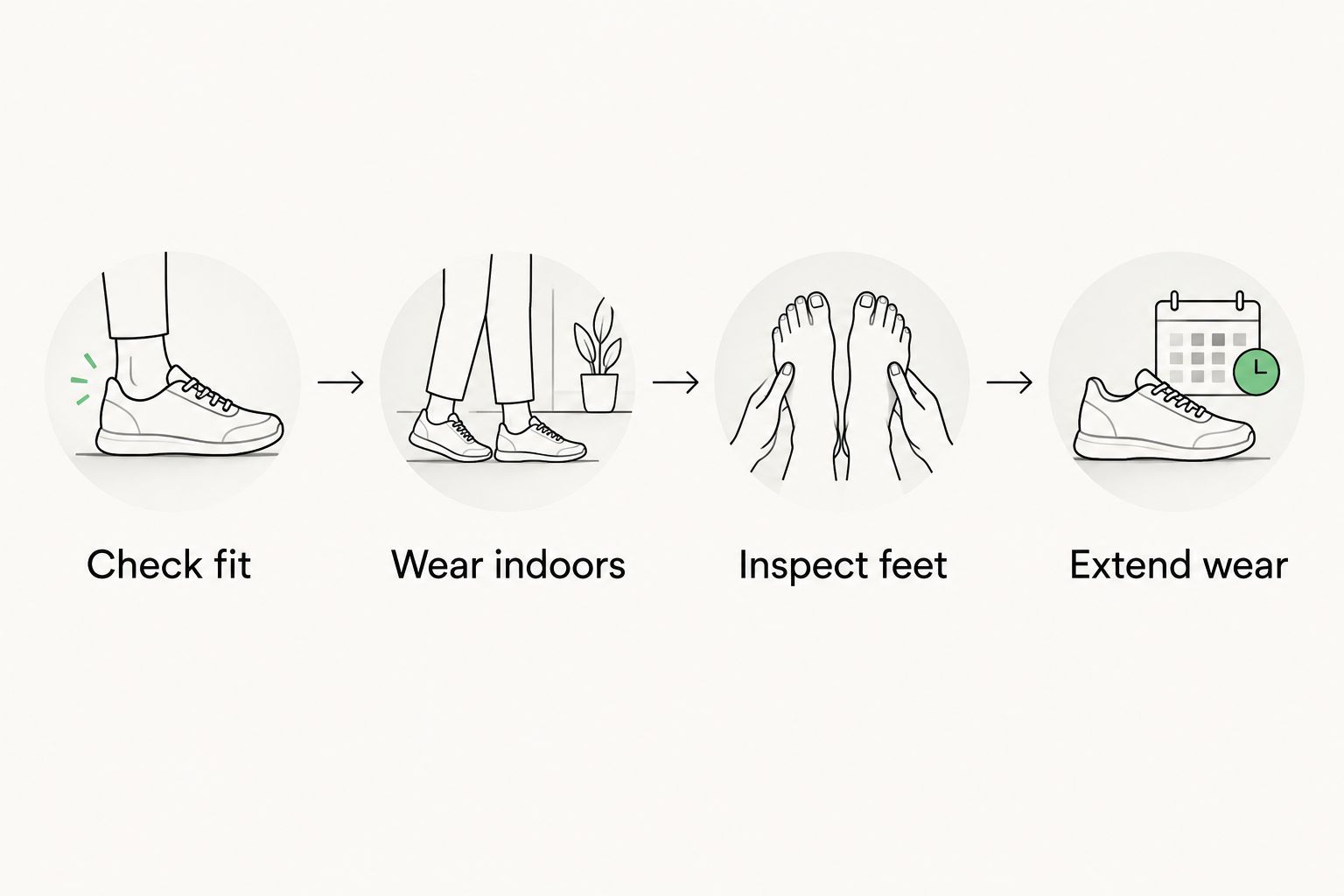
There is no reliable number of days or wears that applies to every pair. Use this sequence instead of a calendar:
- Check fit. Stand and walk in both shoes. Your toes should not be compressed, and your heel should not slide enough to rub.
- Wear indoors. Try the trainers on a clean floor with the socks you expect to wear outside. Keep the first outing close to home.
- Inspect your feet. Take the shoes off and check for rubbing, pressure marks or numbness. Pay attention to whether a sore spot returns in the same place.
- Extend wear only if comfortable. Add walking gradually. If the same problem returns, revisit fit rather than treating discomfort as progress.
The distinction is simple: a stiff feel can change; a shoe that squeezes your foot is not waiting for a deadline. If you need to adjust the hold across the top of the foot, start with how to lace platform trainers for a snug fit. Lacing can change how securely a shoe sits. It cannot create space where the shoe itself is too narrow.
WHY THIS MATTERS
A platform changes the feel of walking because the sole places more material between your foot and the ground. That sensation is separate from the fit of the upper. Do not call both of them break-in: one is getting used to how the shoe moves; the other can be pressure against your foot.
This matters particularly when you buy a pair for an event. A short indoor walk tells you more than leaving the shoes in their box until the day you need them. In 2026, the useful question is not whether the trainers will be ready by a particular date. It is whether you can walk in them now without a recurring sore spot.
SWEAR London’s made-to-order, archival footwear is built around silhouettes rather than a passing change of shape. That makes the decision personal: choose the form you want, then check the fit you actually have. Heritage is a reason to keep a shoe. It is not a reason to ignore your feet.
WHAT SHOULD YOU EXPECT FROM DIFFERENT PLATFORM TRAINERS?
There is no stated break-in period for either trainer below. Their product descriptions identify different uppers and an archival design reference; they do not establish which pair will soften faster. Use the comparison to decide what to inspect when you try them on.
| Trainer | Stated details | Best for | What to check | Limitation |
|---|---|---|---|---|
| Element Platform Sneakers – Triple Black Nubuck & Suede | Nubuck-and-suede upper; revived EXTERMINATOR sole | Someone who wants a trainer tied directly to SWEAR London’s archive | Whether the upper presses at the toe or across the foot | The description gives no break-in time or fit guarantee |
| Air Rev. Nitro Sky Platform Sneakers – Triple Black | Low-top platform sneaker; AIR REV. NITRO design raised onto a platform | Someone who wants a low-top platform shape | Whether the heel stays secure as you walk | The description gives no break-in time or fit guarantee |
SWEAR London’s Element platform trainers are best for someone who wants an archival sole and a nubuck-and-suede upper, not a promised break-in schedule. The Air Rev. Nitro Sky offers another low-top shape to consider. Neither product description replaces a fit check, and neither supplies a basis for claiming faster comfort.
If both appeal to you, compare the points where each shoe meets your foot rather than assuming the taller-looking or softer-looking option will feel better. Look at toe space while standing, heel movement while walking and pressure across the top after lacing. A shape can suit the outfit and still be wrong for the foot.


WHY BREAK-IN FEELS DIFFERENT FROM ONE PAIR TO ANOTHER
No material or sole description can tell you how many wears your feet will need. These are the factors you can assess directly:
- Initial fit. Check the shoe while standing as well as sitting. If your toes are cramped before you take a step, repeated wear is not a fitting method.
- Heel hold. Notice whether your heel stays in place. Repeated slipping can create friction even when the front feels roomy.
- Lacing tension. A secure lace-up should hold your foot without pressing painfully across the top. Adjust the laces before deciding the upper is the problem.
- Upper contact. Notice where the material meets your toes, instep and ankle. A material name alone does not tell you how it will feel on your foot.
- Sole movement. A platform can feel different underfoot from a thinner sole. Pay attention to your balance and how the shoe moves when you turn, not just how it feels while standing still.
- Socks. Try the same socks you intend to wear with the trainers. Changing socks changes the amount of space inside the shoe and the points of contact.
These checks separate a new-shoe sensation from a persistent fit problem. They also give you something specific to act on: change lacing if hold is the issue, reconsider size or shape if space is the issue, and stop wearing the pair if pain continues.
HOW DO YOU BREAK IN PLATFORM TRAINERS WITHOUT FORCING IT?
Start indoors, on a surface where you can walk and turn normally. Standing in front of a mirror checks the look; walking checks the shoe. Use your usual socks and lace both feet as you would for an outing.
Walk, then take the trainers off and inspect your feet. If you felt a brief unfamiliar stiffness but no sore spot, try another short wear before a longer trip. If the same area rubs each time, do not extend the walk to prove a point.
A shoe that feels acceptable while standing can behave differently on stairs or when you change direction. Test those movements in a safe setting before relying on a new pair for a long day. For more on adapting your stride, read how to walk comfortably in platform trainers.
Do not use pain as a measure of progress. The goal is a wearable pair, not a record of how long you tolerated it. If you have persistent pain, numbness, broken skin or an existing foot condition, stop wearing the shoes and seek appropriate professional advice.
CAN YOU SPEED UP THE BREAK-IN PERIOD?
You can check and adjust fit; you cannot set a dependable deadline for a shoe to become comfortable. In 2026, the sensible shortcut is to identify the exact problem early. A loose heel, tight toe area and pressure across the instep call for different responses.
Start with lacing when the shoe feels secure in one place but loose in another. Check sock thickness if the fit changes between try-ons. If your toes lack space or the same spot hurts on every wear, do not count on extra walking to fix it.
Avoid turning a fit test into an endurance test. A planned event is not the place to discover that a pair rubs. Wear the trainers at home before you commit to a long outing, and keep another comfortable option available if you have not established that the new pair works for you.
DO PLATFORM SOLES NEED TO SOFTEN BEFORE YOU WEAR THEM OUT?
No fixed softening period is established for platform soles in the supplied product details. You can notice a different underfoot feel without assuming the sole needs to change. Test walking, stopping and turning before deciding whether the movement suits you.
SWEAR London’s archive-led shapes make the silhouette the point. Comfort still has to be assessed on your feet. If a platform feels unstable to you, treat that as a reason to reconsider the pair rather than a challenge to wear through.
WHEN SHOULD YOU STOP TRYING TO BREAK THEM IN?
Stop when discomfort is repeatable, not merely unfamiliar. Pressure that returns in the same place, skin that rubs raw, numbness or pain are clearer signals than the number of times you have worn the shoes.
If you are unsure whether the issue is sizing, separate length, width and heel hold. More length does not automatically solve a width problem, and tighter laces do not make a compressed toe box comfortable. The guide to whether designer trainers fit true to size covers that wider sizing question.
FAQ
How long do platform trainers take to break in in 2026?
There is no fixed break-in time for platform trainers in 2026. Check comfort across short wears and stop if pressure, rubbing or numbness persists.
Should platform trainers hurt when they are new?
No. An unfamiliar feel is different from pain. Repeated rubbing or pressure is a reason to check fit rather than keep wearing the shoes.
Can lacing help new platform trainers feel better?
Lacing can improve how securely platform trainers hold your foot. It cannot add space to a shoe that is too narrow or short.
Should I wear new platform trainers outside straight away?
Try new platform trainers indoors first. Walking and turning at home lets you check heel movement and pressure before a longer outing.
Do platform trainer soles soften with wear?
No specific softening time applies to every platform sole. Judge whether the shoe feels stable and comfortable when you walk rather than waiting for a promised change.
What if only one foot rubs in new platform trainers?
Stop and check the fit on that foot. Assess toe space, heel movement and lacing separately; do not assume both feet will respond alike.
Are SWEAR London platform trainers guaranteed to break in?
No break-in guarantee is stated for SWEAR London platform trainers in the supplied product details. Choose by the shape you want, then assess fit on your own feet.
ONE LAST THING
In 2026, the most useful break-in test is not how a new platform trainer looks while you stand still. It is whether you forget about the pressure points when you walk. Keep the archival shape; reject a fit that keeps announcing itself.