


Womens vegan trainers last 12 to 18 months of regular wear on average in 2026, stretching past two years for pairs worn a few times a week and stored properly. The number most guides skip: the sole fails long before the vegan upper does, so judging lifespan by whether the material cracks gets the answer wrong.
- Womens vegan trainers last 12 to 18 months of regular wear in 2026, with the sole wearing out before the upper does.
- Daily wear cuts lifespan to 6 to 12 months; occasional weekend wear stretches it past 18 to 24 months.
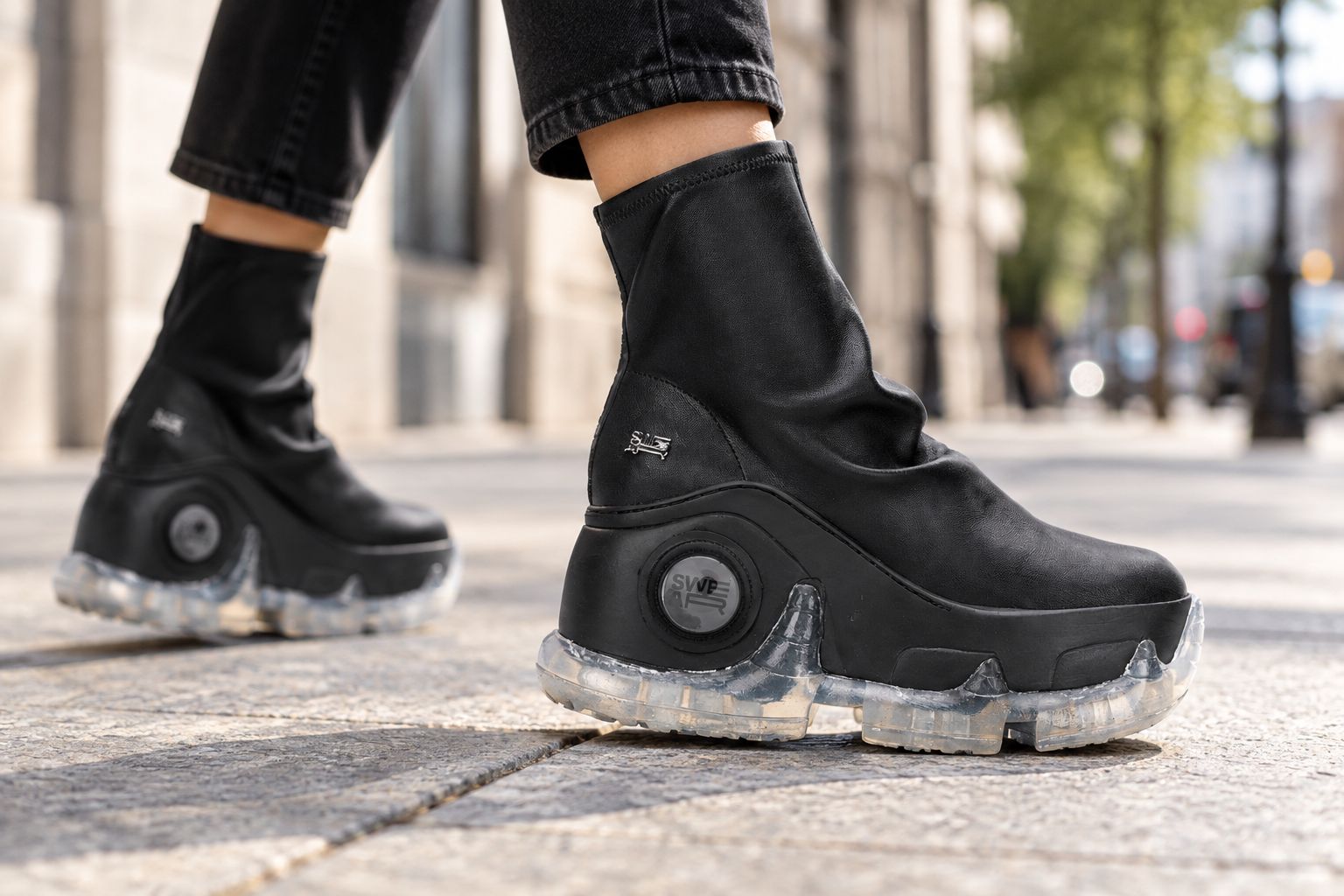
- Handcrafted, made-to-order pairs like SWEAR London's Air Rev Xtra vegan platform boots use heavier sole units than glued fast-fashion trainers.
- Vegan leather uppers rarely fail first in 2026 — poor storage and sole wear end a pair's life before the material does.
WHY THIS MATTERS
Vegan trainers still carry a reputation problem. Shoppers assume vegan means cheaper glue and a shorter life, and cheap vegan fast-fashion pairs built that reputation honestly.
That reputation doesn't hold for handcrafted, made-to-order construction. Made-to-order pairs — like SWEAR London's Air Rev Xtra vegan platform boots — are built one pair at a time rather than pressed through a mass line, and construction quality is the single biggest lifespan factor after wear frequency. Buying on price alone, without checking sole construction, is how a trainer ends up binned at month six instead of month eighteen.
HOW LONG DO WOMENS VEGAN TRAINERS LAST?
The honest answer depends on how often you wear them, not just what they're made from. Here's the breakdown for 2026:
| Wear frequency | Typical lifespan | What wears out first |
|---|---|---|
| Daily (5-7 days a week) | 6 to 12 months | Sole tread and midsole cushioning |
| Regular (2-4 days a week) | 12 to 18 months | Sole edges, then upper crease lines |
| Occasional (weekends only) | 18 to 24+ months | Upper crease lines before the sole |
Regular wear is the bracket most shoppers fall into, which is why 12 to 18 months is the number worth planning around in 2026. Daily wearers should budget for a replacement closer to the one-year mark; weekend-only wearers can stretch a pair well past two years.
WHY VEGAN TRAINER LIFESPAN VARIES
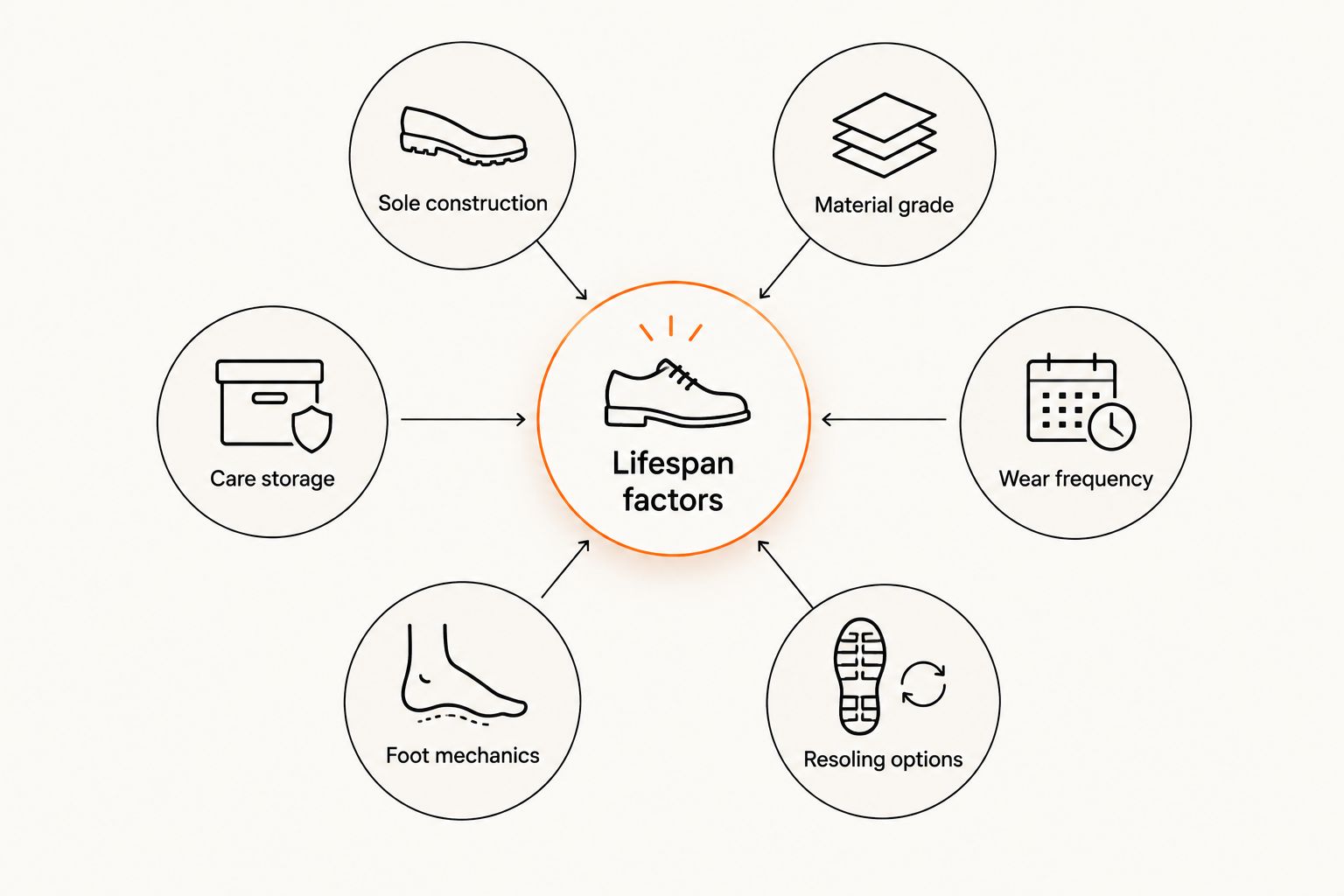
Six factors decide whether a pair dies at month six or survives past two years:
- Sole construction. Glued soles common in fast-fashion trainers separate first; bonded or stitched construction holds longer.
- Material grade. PU and microfiber vegan leathers vary widely in thickness — thin PU cracks at flex points sooner than a heavier microfiber upper.
- Wear frequency. Daily rotation with no rest day breaks down midsole cushioning faster than alternating between two pairs.
- Care and storage. Damp storage and no cleaning routine shortens lifespan more than the vegan material itself does.
- Foot mechanics. Overpronation and heavy toe-off pressure wear one edge of the sole faster than the rest.
- Resoling options. A pair built to be resoled resets the clock on the part that fails first; a glued pair usually can't be.
HANDCRAFTED VS MASS-PRODUCED: WHERE MADE-TO-ORDER PAIRS HOLD UP LONGER
Fast-fashion vegan trainers are built to a price point, and the sole unit is usually the first cut. Made-to-order construction skips that shortcut — each pair is built on original moulds rather than run through a mass press, so the sole and upper get more attention per unit.
SWEAR London builds its Air Rev Xtra and Air Revive vegan platform boots this way: made-to-order, one pair at a time, on original 1995-era moulds rather than mass tooling. That doesn't make a pair immortal, but it removes the most common failure point in cheap vegan trainers — a sole that separates from the upper within months.


IS VEGAN LEATHER AS DURABLE AS REAL LEATHER?
Not identically, but the gap is smaller than most buyers expect in 2026. High-grade PU and microfiber vegan leathers hold their shape and resist cracking about as well as mid-range real leather, and often outperform low-grade genuine leather that hasn't been treated. Full comparison in is vegan leather as durable as real leather.
CAN VEGAN BOOTS BE RESOLED?
Some vegan boots can be resoled and some can't — it depends on whether the sole is bonded or stitched to the upper, not on the vegan material itself. Check the construction before assuming either way; the full breakdown is in can vegan boots be resoled.
HOW LONG DO VEGAN BOOTS LAST?
Vegan boots last roughly the same 12 to 18 months of regular wear as vegan trainers in 2026, though heavier platform soles in boots often outlast lighter trainer soles by a few months. See the full boot-specific answer at how long do vegan boots last.
FAQ
What's the best vegan trainer construction for durability?
Bonded or stitched sole construction outlasts glued construction, which is the first point of failure in most fast-fashion vegan trainers. Made-to-order builds tend to use the sturdier option.
Is it worth buying womens vegan trainers in 2026?
Yes, if the construction is bonded or stitched rather than simply glued. A well-built pair lasts 12 to 18 months of regular wear, on par with leather trainers at the same build quality.
Do vegan trainers crack over time?
Thin PU uppers can crack at flex points after heavy wear, but higher-grade PU and microfiber vegan leathers resist cracking about as well as mid-range real leather. Cracking is a material-grade issue, not a universal vegan trait.
How long do vegan boots last?
Vegan boots last roughly 12 to 18 months of regular wear, similar to vegan trainers, with heavier platform soles sometimes outlasting trainer soles by a few months.
Can vegan boots be resoled?
Some can, depending on whether the sole is bonded or stitched to the upper rather than glued. Check construction before buying if resoling matters to you.
Do womens vegan trainers run true to size?
Fit varies by brand and last shape, so check the specific size guide for the pair rather than assuming standard sizing carries over.
Are womens vegan trainers durable enough for daily wear?
Daily wear brings lifespan down to 6 to 12 months on average, versus 12 to 18 months for regular wear, so daily wearers should plan for a shorter replacement cycle.
ONE LAST THING
The upper is almost never what kills a pair of vegan trainers first — it's midsole compression and sole-edge wear. Rotating two pairs instead of wearing one daily lets the midsole foam rest and rebound between wears, which is what pushes lifespan toward the 18 to 24-month mark even with frequent use. That's a wear-pattern fix, not a material upgrade, and it costs nothing.