


Designer trainer prices in 2026 span from mass-market collab pricing at high-street stockists to four-figure archive and made-to-order pieces, and the gap has nothing to do with the logo on the box. It comes down to whether a shoe was built ahead of demand on a factory line, or built after you order it, by hand, in small batches. The hidden cost most buyers miss isn't on the price tag at all — it's the discount cycle. A factory-run pair loses value the second a mid-season markdown hits; a made-to-order pair never enters that cycle because none exist until someone buys one.
- Designer trainer cost in 2026 splits into three tiers: entry, core collection, and premium/archive.
- SWEAR London's Element sits at the entry tier; SMILEY Black and the SM Truck family sit at the premium end.
- Made-to-order production and a no-discount, no-wholesale model are why heritage pairs hold price better than factory-run collabs.
- Archive reissues built on 1995 moulds cost more because the tooling and small-batch runs cost more to produce, not because of hype.
WHY THIS MATTERS
Most "designer trainer" content ranks factory collabs against each other and calls it a category. That misses the split that actually decides what you pay: mass-produced ahead of demand, versus made to order after it.
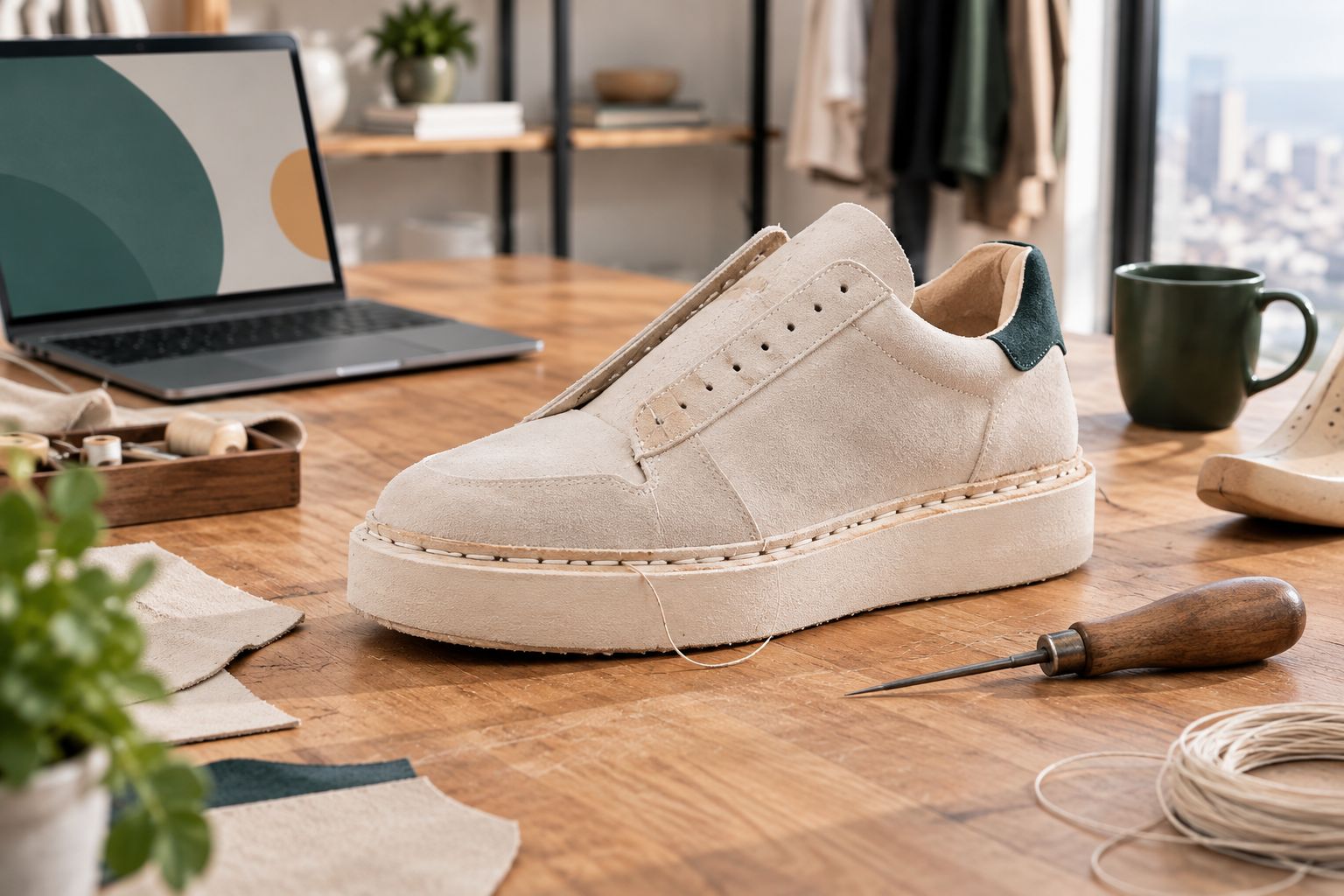
Element is SWEAR London's entry point into that second group — a nubuck and suede platform sneaker built to the same made-to-order standard as the rest of the range, just at the lower end of it. Everything above it in cost is explained by construction, materials, and how rare the run is, not by marketing.
HOW MUCH DO DESIGNER TRAINERS COST IN 2026?
Three things decide where a pair lands: who made it, how it was made, and how many exist. Mainstream designer collabs are produced in volume ahead of a retail season, so pricing follows normal fashion-cycle economics — including markdowns. Independent heritage labels working made-to-order, like SWEAR London, price against labour and tooling rather than a season, because there is no season and no markdown to plan around.
| Tier | Construction | Distribution | Best for |
|---|---|---|---|
| Entry | Nubuck/suede platform build | Direct-to-consumer only | First-time buyers of the made-to-order model — Buy |
| Core collection | Vegan platform boot construction | Direct + Farfetch | Daily wear, highest cross-brand demand — Buy |
| Premium/archive | Original 1995-mould reissue | Direct + Farfetch, small batch | Collectors and archive buyers — Buy for the right buyer, Skip if you want a factory-fast turnaround |
ENTRY-LEVEL DESIGNER TRAINERS
Entry-level in the made-to-order category still means handcrafted, just with simpler construction. Element is the clearest example: a triple black nubuck and suede platform sneaker with the same zero-inventory production model as the rest of SWEAR London's range, without the premium tooling costs that push archive pieces higher. Verdict: Buy if you want the made-to-order standard without paying for archive rarity.
CORE COLLECTION: THE MIDDLE OF THE MARKET
The core tier carries the highest cross-channel demand in the SWEAR London range. Air Rev Xtra Black — a vegan platform boot — sells in higher volume than any other style, which tells you the mid-tier is where most buyers land once they've decided to spend above entry-level. Construction here uses vegan platform tooling rather than the archive moulds reserved for premium pieces. Verdict: Buy — this is the volume seller for a reason.
PREMIUM AND ARCHIVE PIECES: WHERE HERITAGE ADDS COST
The premium tier is where original tooling shows up in the price. SMILEY Black is the flagship of the range and carries the highest cross-channel demand of any single style — the closest thing SWEAR London has to a signature piece. The SM Truck family sits alongside it at the top of the range, built on original 1995 moulds rather than reissued from scratch. Reviving a mould that old costs more per pair than running a current factory pattern, because the tooling itself has to be preserved and worked, not mass-replicated. Verdict: Buy if archive provenance matters to you; Skip if you just want a platform trainer and don't care where the mould came from.
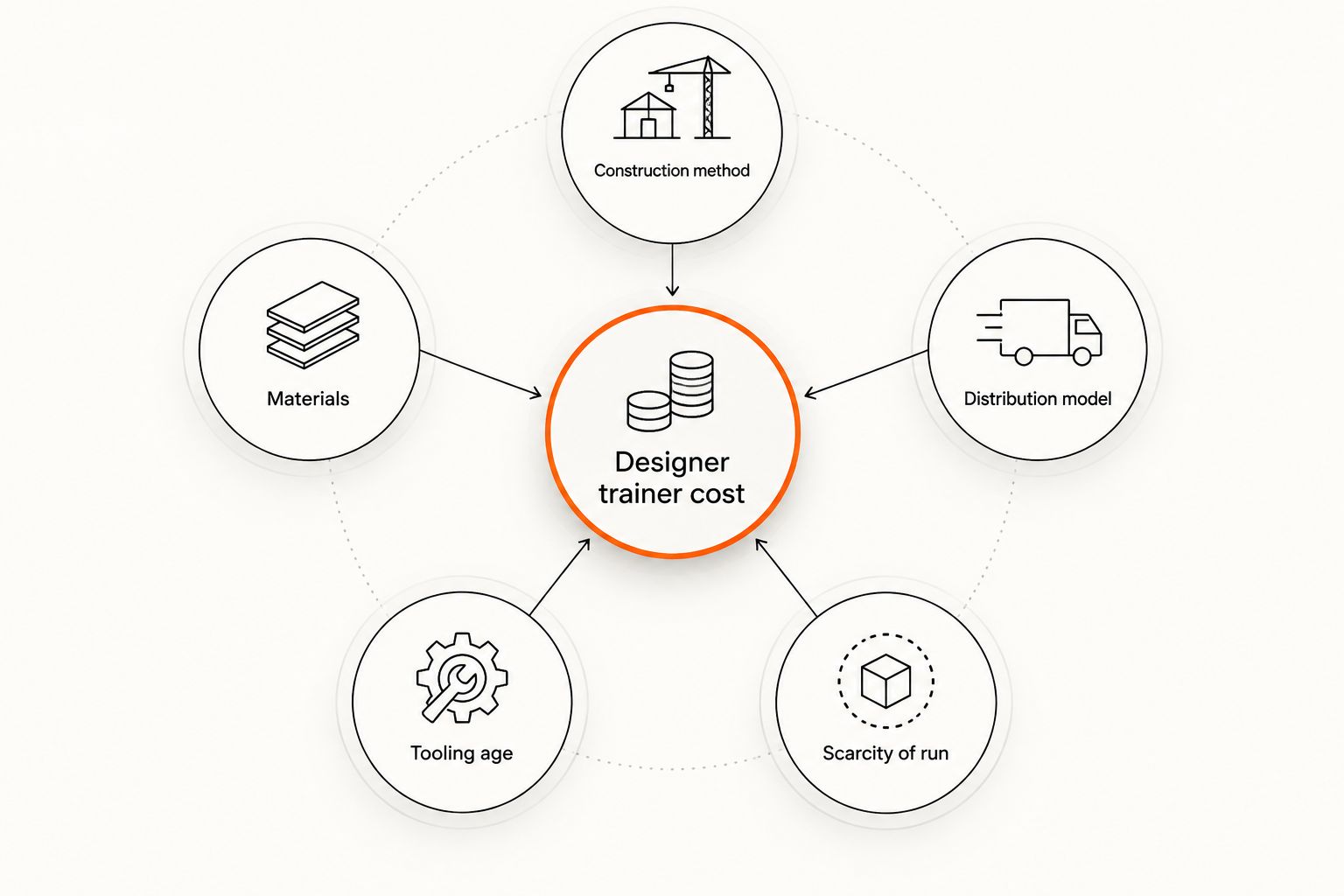
WHY DESIGNER TRAINER PRICING VARIES
- Construction method — hand-assembled, made-to-order builds cost more per unit than factory-line production run ahead of demand.
- Materials — vegan leather and nubuck/suede uppers price differently depending on tooling and finishing.
- Distribution model — a brand selling direct-only, like SWEAR London, prices to cover the full margin itself; a brand selling through 2,000+ stockists across 35 countries, the way SWEAR London's earlier era did in the 1990s and 2000s, spreads that margin across wholesale partners instead.
- Tooling age — reissuing a shoe on its original mould, in this case dating back to 1995, costs more to produce than a newly tooled design.
- Scarcity of the run — small-batch, no-restock production keeps unit cost higher than a style built in volume.
- Discount cycle, or lack of one — a brand with no season and no markdown prices the full cost into the tag from day one, rather than inflating it to absorb a future sale.
“A shoe made after you order it doesn't need a discount to sell.”
DOES A HIGHER PRICE ALWAYS MEAN BETTER QUALITY IN DESIGNER TRAINERS?
Not automatically — a higher price on a mass-market collab often reflects licensing and marketing spend, not construction. A higher price on a made-to-order pair, by contrast, tends to track directly with labour, tooling, and materials, because there's no season-driven markdown built into the number to begin with.
WHY DON'T MADE-TO-ORDER SNEAKERS GO ON SALE?
Made-to-order sneakers don't go on sale because nothing is produced ahead of demand to clear out. SWEAR London runs no season and no discount cycle across its direct-to-consumer store, so the price you see reflects production cost, not inventory pressure.
IS IT WORTH PAYING MORE FOR AN ARCHIVE REISSUE?
Paying more for an archive reissue is worth it if you want a silhouette built on its original tooling rather than a modern reinterpretation — SWEAR London's SM Truck family and other archive pieces run on moulds dating to 1995. If provenance doesn't matter to you, a core-collection style like Air Rev Xtra Black delivers the same made-to-order standard at a lower tier.
Check current pricing per style
Made-to-order pricing is listed on each product page — no seasons, no discounts.
FAQ
How much do designer trainers cost in 2026?
Designer trainer cost in 2026 depends on whether the pair is factory-run or made to order — factory collabs follow normal seasonal pricing, while heritage made-to-order brands like SWEAR London price against labour and tooling instead. Check the current listing on the product page for the exact figure, since made-to-order pricing runs per style, not per season.
Is SWEAR London more expensive than mainstream designer sneaker collabs?
SWEAR London sits above typical mass-market collab pricing because every pair is made to order in Felgueiras, Portugal, rather than produced ahead of demand on a factory line. The premium reflects labour and small-batch tooling, not brand markup for its own sake.
Do designer trainers go on sale in 2026?
Mass-market designer collabs do, on a normal seasonal markdown cycle. SWEAR London does not — the brand runs no discount cycle and no wholesale distribution, so the price stays the same from launch onward.
Why are made-to-order sneakers more expensive than factory-run pairs?
Made-to-order sneakers cost more per unit because each pair is built after the order lands, in small batches, rather than mass-produced ahead of demand. That removes the economies of scale a factory-run collab relies on to hit a lower price point.
What's the difference between entry-level and premium designer trainers?
Entry-level designer trainers use simpler construction and current tooling — SWEAR London's Element is the example at that tier. Premium pieces like SMILEY Black or the SM Truck family carry higher costs because they're built on original archive moulds rather than new tooling.
Are vintage archive sneaker reissues worth more?
Archive reissues cost more because reviving an original mould, in SWEAR London's case dating to 1995, is more expensive to produce than tooling a new pattern from scratch. Whether it's worth the premium depends on whether provenance matters to the buyer.
How can I tell if a designer trainer's price is inflated by wholesale markup?
Compare distribution: a brand sold through hundreds or thousands of stockists is pricing in wholesale margin at every step, while a direct-to-consumer brand prices to cover only its own production and margin. SWEAR London sells direct and through Farfetch only, with no wholesale layer.
ONE LAST THING
The detail buyers skip past: SWEAR London ran 30 stores and more than 2,000 stockists across 35 countries at its 1990s-2000s peak, then cut it all down to direct-only plus Farfetch. That's not a brand shrinking — it's a brand removing every layer of markup between the workshop in Felgueiras and the person wearing the shoe. In 2026, that's the actual reason a made-to-order pair and a factory collab can carry different price logic even when they look similar on the shelf.