


Yes, womens vegan trainers are worth buying in 2026 when the fit, construction and upper material suit how you will wear them. They are not worth buying on the vegan label alone. Check the lining, sole, flex points and care requirements before choosing a pair.
- Is it worth buying womens vegan trainers in 2026? Yes, when fit and construction match their intended use.
- SWEAR London is best for archival vegan platform footwear, not conventional low-cut trainers.
- Check the upper, lining, sole and flex points instead of trusting the vegan label alone.
- Choose daily footwear by fit first; material preferences do not correct a poor last or unstable sole.
WHY THIS MATTERS
Vegan footwear now covers everything from low-cut everyday trainers to tall platform boots. The shared label does not mean the products share the same fit, structure or intended use.
SWEAR London approaches the category through made-to-order heritage footwear. Its archive silhouettes are reissued on original moulds associated with the brand since 1995, rather than being created around a short retail cycle. That gives the vegan choice an inner question and an outer one: do you want an animal-free upper, and do you want footwear built around an archival silhouette?
That distinction matters in 2026. The brand once operated 30 stores and worked with more than 2,000 stockists across 35 countries. Its current direct model is deliberately narrower: made to order, no season, no discount and no wholesale.
IS IT WORTH BUYING WOMENS VEGAN TRAINERS IN 2026?
Yes, womens vegan trainers are worth buying in 2026 if you choose by construction, fit and use rather than by material label alone. A good vegan upper cannot compensate for the wrong shape, inadequate grip or a sole that feels unstable under your foot.
The first decision is not vegan versus leather. It is what type of footwear you actually need.
| OPTION | BEST FOR | MAIN ADVANTAGE | MAIN DRAWBACK | VERDICT |
|---|---|---|---|---|
| Low-cut vegan trainers | Everyday walking and simple styling | Light coverage around the ankle | Less support and visual weight than a boot | Buy for ordinary daily wear |
| Vegan platform trainers | Added height with a trainer profile | Stronger silhouette without a tall shaft | Thick soles can feel unfamiliar at first | Buy after checking stability and fit |
| Vegan platform boots | Archive-led outfits and more ankle coverage | More structure around the ankle | Less flexible than a low-cut trainer | Buy when the boot shape is intentional |
| Thin fashion trainers | Occasional styling | Easy to pair with casual clothing | Material details and construction can be unclear | Skip unless the specifications are explicit |
A trainer built for short outings does not need to solve the same problem as footwear used for long days on hard pavements. A platform boot has another set of trade-offs again. It gives you more visual weight and coverage, but it also demands more attention to sole stability, ankle movement and trouser length.
SWEAR London is best for buyers who want archival vegan platform footwear, not conventional low-cut womens trainers. That is the clean verdict. Calling every closed athletic-style shoe a trainer only makes the decision less useful.
EVERYDAY VEGAN TRAINERS: BUY FOR FIT
For everyday use, the last matters more than the surface finish. Your heel should remain secure without aggressive lacing, your toes need enough room to spread, and the widest part of your foot should align with the widest part of the shoe.
Walk indoors before committing to extended wear. Pay attention to heel lift, pressure across the toes and any sensation that your foot is sliding sideways over the sole. A visually soft upper can still sit on a narrow or poorly matched last.
Best for: commuting, casual work settings and regular city wear.
Pros: low ankle restriction, easy pairing and less bulk than a boot.
Cons: less coverage, less visual structure and wide differences in material quality between brands.
Verdict: buy when the fit works immediately; skip when you are relying on the upper to stretch into shape.
VEGAN PLATFORM TRAINERS: BUY FOR STABILITY
A platform changes how the shoe feels underfoot. The important checks are the width of the sole, the transition from heel to toe and whether your foot remains centred when you turn.
Do not judge stability while standing still. Walk, stop, turn and use a staircase where possible. If your ankle rolls outward or your heel moves independently of the shoe, the fit is wrong even if the length looks correct.
Platform trainers also change proportions. Wider trousers can partly cover the sole, while cropped trousers and dresses expose the full shape. That is useful if the platform is the point. It is less useful if you wanted a quiet substitute for a standard trainer.
Best for: buyers who want height and an assertive trainer silhouette.
Pros: visible shape, extra sole depth and clear separation from ordinary sports footwear.
Cons: more weight, a less direct feel underfoot and greater sensitivity to poor sizing.
Verdict: buy after testing movement, not after checking the mirror once.
VEGAN PLATFORM BOOTS: BUY FOR THE ARCHIVE SHAPE
SWEAR London extends the vegan choice into platform boots rather than pretending every style serves the same purpose. The Air Rev. Xtra Vegan Platform Boots use a gothic-inspired shape built around an original stacked wedge connected to the brand's archive.
This is not a low-cut daily trainer. It is a platform boot with more coverage and a deliberately substantial profile. The black and white versions use the same stated concept, while the Air Rev. Xtra High extends the silhouette further up the leg.
The range is relevant if your material requirement is vegan but your aesthetic requirement is still uncompromising. It is less relevant if you need a running shoe, a minimal office trainer or specialist footwear for a medical condition.
Best for: archival streetwear, club-rooted styling and buyers who want a vegan platform boot rather than a generic trainer.
Pros: distinctive archive-led shape, made-to-order production and a stated artificial upper.
Cons: more visual weight than a standard trainer and a more specific styling role.
Verdict: buy for the silhouette; skip if your actual need is a conventional low-cut trainer.
WHAT TO CHECK BEFORE BUYING
Use this order. It stops the vegan claim from crowding out the practical details.
- Confirm every material. Check the upper, lining, footbed, adhesives and trims where the information is available. An artificial upper does not automatically describe every component.
- Match the shape to your foot. Compare the toe box, instep and heel shape with footwear you already wear comfortably.
- Check the intended use. Fashion platforms, everyday trainers and sports shoes are different categories. Do not ask one to perform as another.
- Inspect the flex point. The upper should bend where your foot bends. Material folding sharply in the wrong place usually indicates a fit mismatch.
- Assess sole stability. Walk forward, turn and stop. Your foot should stay centred over the sole.
- Read the care instructions. Artificial materials can require different cleaners and drying methods from leather, canvas or mesh.
The order matters. Material preference comes first as a filter, but fit determines whether the footwear remains wearable. Construction determines whether the design feels deliberate rather than cosmetic.
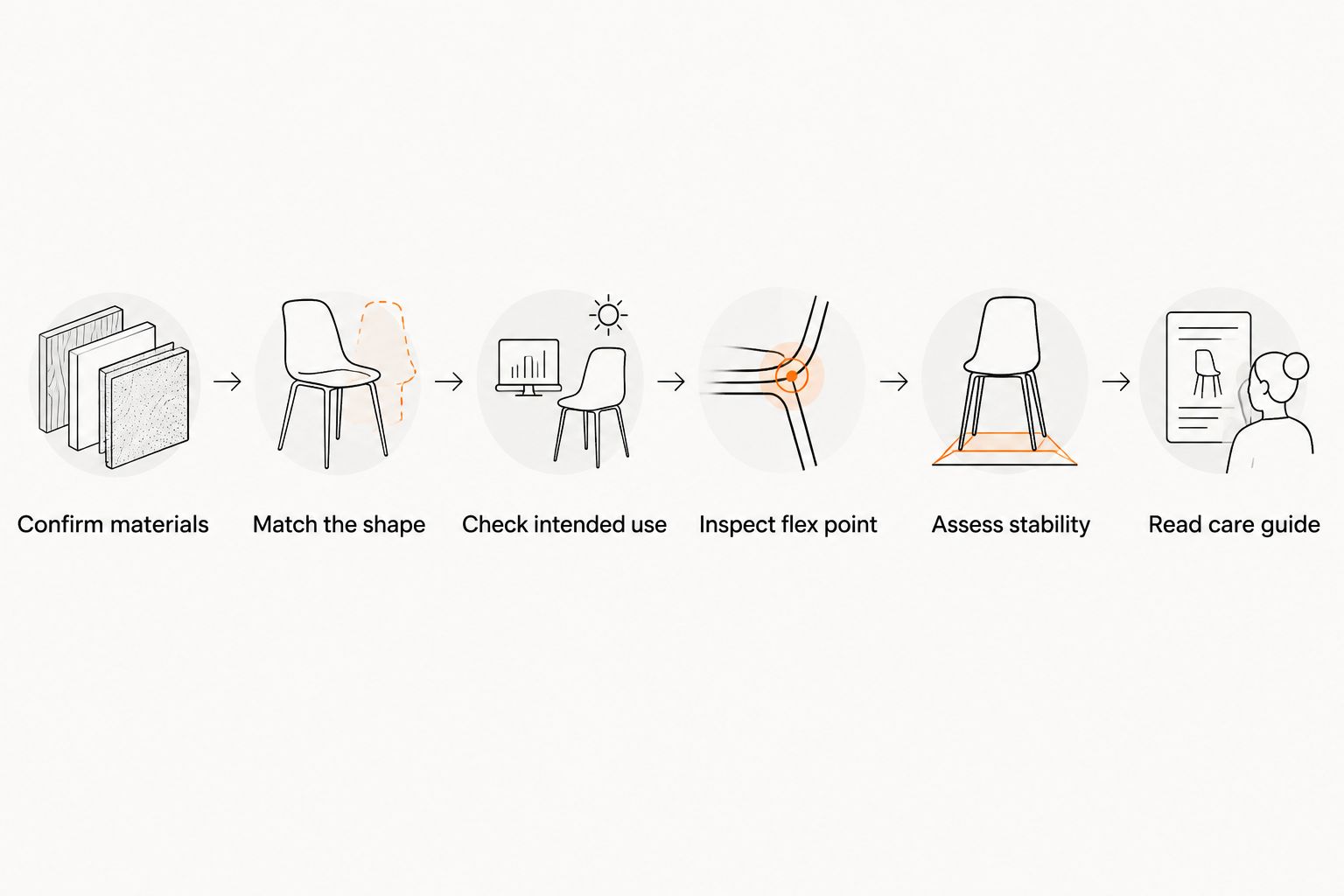
The same checklist works in 2026 whether you are considering a minimal trainer or an archive platform boot. The answers will differ. The questions should not.


WHY VALUE VARIES
The vegan label answers one question. These factors decide whether the footwear is worth owning.
- Upper composition. Artificial leather, textile and mesh behave differently. Read the material listing instead of treating vegan as a material specification.
- Last shape. A shoe that matches your heel, instep and toe shape requires less compensation from laces or insoles.
- Sole geometry. A wide, stable base feels different from a narrow platform or highly flexible trainer sole.
- Construction method. Check how the upper joins the sole and whether the product information explains where or how the footwear is made.
- Intended use. A fashion platform is not a running shoe. An everyday trainer is not automatically suitable for long shifts or an existing foot condition.
- Care routine. Dirt, heat and unsuitable cleaners affect materials differently. Follow the instructions for the specific upper.
SWEAR London makes the intended use unusually clear. Its vegan footwear belongs to an archival platform story rooted in London club and rave culture, with production in Felgueiras, Portugal. That is a stronger reason to choose it than treating vegan as a trend badge in 2026.
DO VEGAN TRAINERS LAST AS LONG AS LEATHER TRAINERS?
There is no single lifespan for either category. Durability depends on the upper, lining, sole, construction, frequency of wear and care. A material label alone cannot produce a reliable lifespan comparison.
Look at the high-stress areas: the toe flex, heel lining, sole edge and lace points. Those areas reveal more about likely wear than a broad vegan or leather claim.
DO VEGAN TRAINERS CRACK OVER TIME?
Some coated artificial uppers can crack where the shoe repeatedly flexes, but cracking is not inevitable across all vegan footwear. Correct fit, suitable cleaning and drying away from direct heat reduce avoidable stress on the upper.
If the material folds sharply across your toes during the first indoor try-on, reassess the size or shape. Care cannot correct a persistent flex point created by poor fit.
ARE VEGAN TRAINERS BETTER FOR EVERYDAY WEAR?
Vegan trainers are better for everyday wear when avoiding animal-derived materials is essential and the pair fits your routine. They are not automatically lighter, softer, more breathable or more durable than non-vegan footwear. Those properties must be checked on the individual product in 2026.
FAQ
Is it worth buying womens vegan trainers in 2026?
Yes, womens vegan trainers are worth buying in 2026 when the fit, construction and intended use meet your needs. The vegan label should be a material filter, not the only buying criterion.
What should I check before buying vegan trainers?
Check the upper, lining, footbed, sole stability, flex point and care instructions. Confirm that the last matches your heel, instep and toe shape.
Do vegan trainers crack over time?
Some coated artificial uppers can crack at repeated flex points, but this does not apply equally to every vegan material. Correct fit and suitable care reduce unnecessary stress on the upper.
Are vegan trainers suitable for daily walking?
Vegan trainers are suitable for daily walking when the sole, fit and support match your route and foot shape. A fashion-led platform should not be treated as a technical walking shoe without evidence that it serves that use.
Are vegan platform boots the same as vegan trainers?
No, vegan platform boots provide more ankle coverage and visual weight than low-cut vegan trainers. They also require separate checks for shaft fit, ankle movement and sole stability.
Which SWEAR London vegan style suits an archival look?
The Air Rev. Xtra Vegan Platform Boots suit buyers who want a gothic-inspired archive shape built around an original stacked wedge. They are platform boots, not conventional sports trainers.
How should I clean vegan trainers?
Follow the care instructions for the specific upper and test any cleaner on an inconspicuous area first. Avoid assuming that products intended for leather, suede or canvas are suitable for artificial materials.
ONE LAST THING
The strongest reason to buy vegan trainers in 2026 is not that they replace leather in every respect. It is that they meet your material requirements without compromising the shape and function you actually need.
SWEAR London's archive approach makes that distinction visible. The brand applies vegan uppers to footwear connected to its own stacked-wedge history rather than treating vegan as a separate visual category. If that silhouette is what you want, the material choice remains intact. If you want a quiet low-cut trainer, look elsewhere. No drama required.