


Yes — men's platform boots can be resoled, but only if the sole is built as a separate, replaceable layer. Boots with a cemented or stacked sole take a new bottom in a standard cobbler visit. Boots built on a single molded unit sole usually can't be resoled at all; the fix is a partial rubber patch or a full sole swap, if a specialist cobbler can source a match, in 2026.
- Men's platform boots can be resoled when the sole is cemented or stacked, not molded as one piece.
- A one-piece unit sole limits repair to a partial patch or a full sole swap in 2026.
- Sole construction decides resole life, not the upper material or the brand name on the box.
- Check the seam between sole and upper before buying if repairability matters to you.
WHY THIS MATTERS
A platform boot with a sole that can't be resoled comes with a built-in expiry date. Once the tread wears through, the boot is finished no matter how solid the upper still is — and platform soles wear faster than flat ones because more rubber sits between your foot and the ground, carrying more impact on fewer contact points.
Knowing the sole construction before you buy, or before your current pair starts wearing thin, decides whether one repair keeps the boot in rotation for another few years or whether you're shopping for a replacement in 2026. The how-to-resole-platform-boots guide covers the repair process step by step; this page covers whether your boots qualify in the first place.
CAN MEN'S PLATFORM BOOTS BE RESOLED?
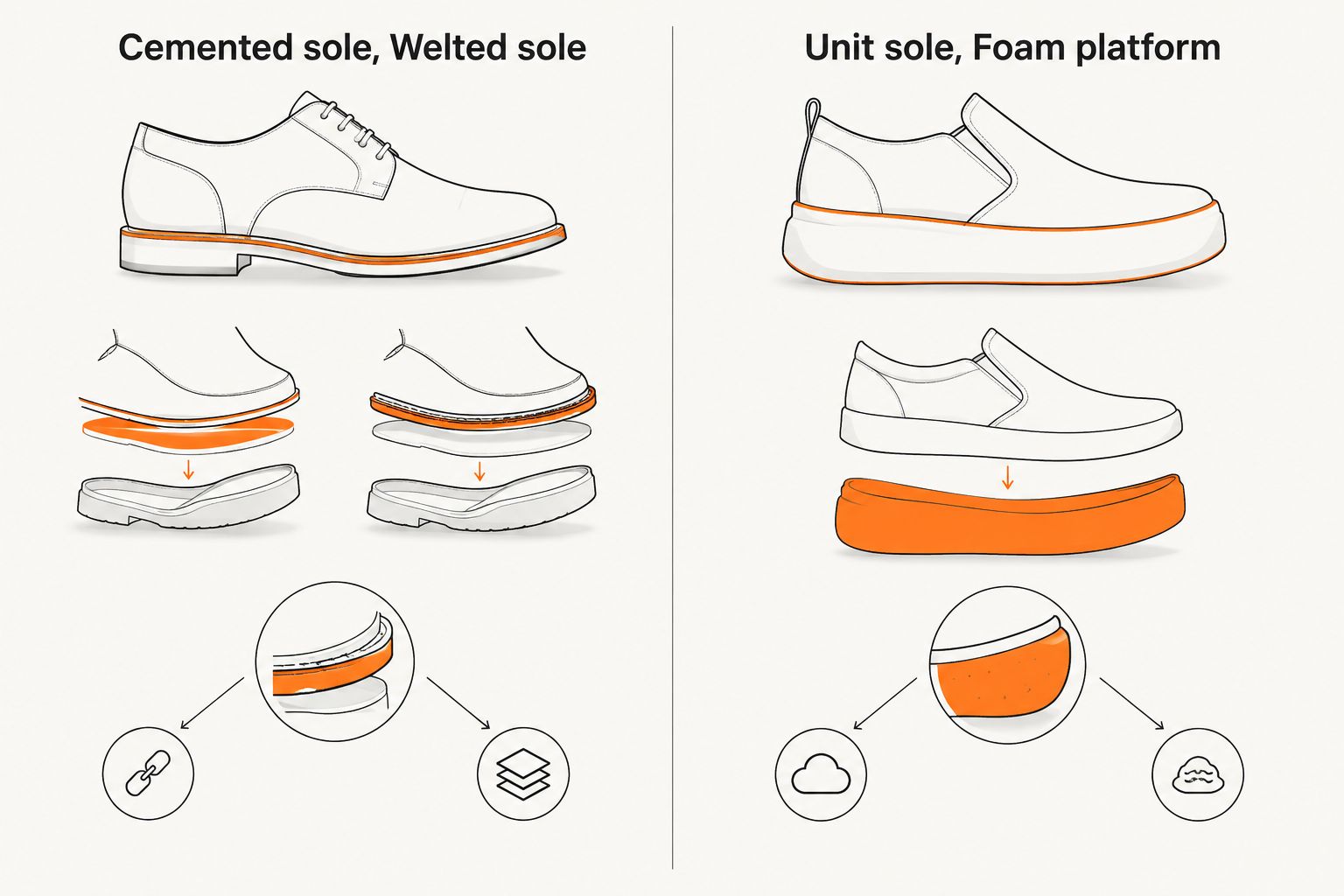
Whether men's platform boots can be resoled comes down to one question: is the sole a separate piece attached to the boot, or is the whole platform molded as a single unit? That split hasn't changed much heading into 2026 — it still decides everything. The table below breaks down the common constructions.
| Sole construction | Resoleable? | Best for |
|---|---|---|
| Cemented or stacked sole | Yes — standard cobbler job | Most heritage platform boots |
| Stitched or welted sole | Yes — most durable resole option | Premium leather platform boots |
| One-piece unit sole (injection-molded) | Limited — partial patch only | Chunky sneaker-boot hybrids |
| Bonded foam or EVA platform | No — sole isn't replaceable | Lightweight festival-style boots |
Cemented and stitched constructions build the sole as its own component, glued or stitched to a midsole that's attached to the upper. A cobbler removes the worn layer and replaces it without touching the boot's structure above the welt line. Unit soles skip that step entirely — the platform, tread and sometimes the heel are one molded piece, so there's no seam to work with. A cobbler can add a rubber lift on top or patch the tread, but that's a stopgap, not a resole.
WHY RESOLING DEPENDS ON CONSTRUCTION
A handful of factors decide whether a pair of platform boots is worth resoling at all:
- Sole attachment method — cemented and welted soles come off cleanly; molded unit soles don't come off at all.
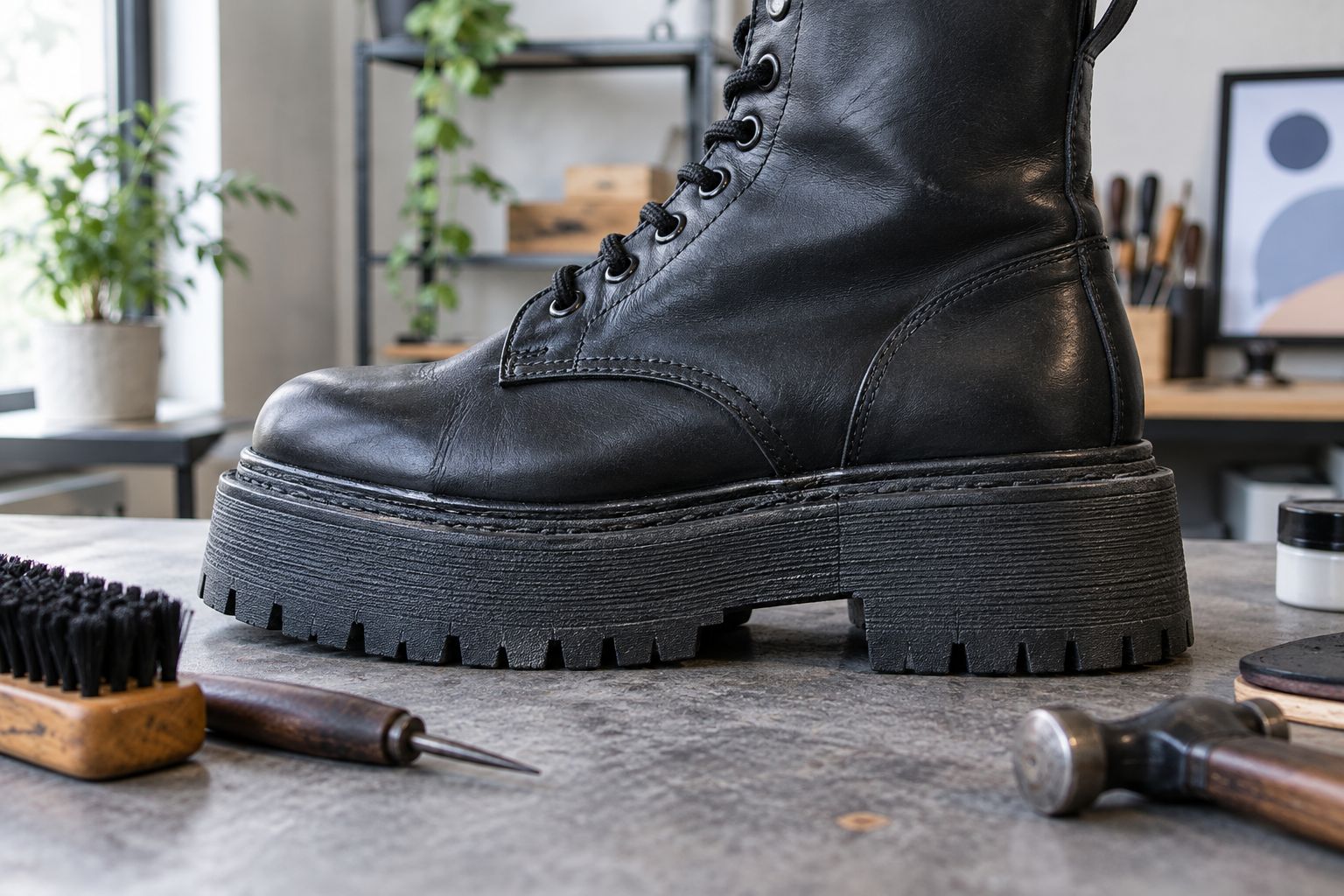
- Platform height — taller stacked soles are usually built in layers because a single thick mold is prone to cracking, which works in your favour if you need a repair.
- Sole material — dense rubber holds a new bond better than foam or EVA, which degrades and doesn't take glue well once it's worn.
- Sole availability — a cobbler needs a matching or compatible sole blank to replace what's gone; unusual tread patterns or platform shapes narrow the options.
- Upper condition — a resole is only worth it if the leather, stitching and lining have life left; a fresh sole on a dying upper is money down the drain.
If you're shopping for a pair built with resoling in mind, look at the construction details on the product page before you buy. SWEAR London's SM Truck 1 Black is built on a stacked platform sole, the kind of layered construction most cobblers can actually work with — worth checking against any pair with a molded unit sole before you commit.
“A boot with a molded unit sole is a boot with a shelf life stamped into the rubber.”
Look at the seam where the sole meets the upper before you buy. A visible line between two separate materials — leather or textile upper, then a distinct sole block — means a cobbler has something to grip onto. A smooth, uninterrupted curve from upper straight into the tread means the whole thing was poured as one piece, and that's the pair with no second life once the tread goes.
If you're browsing for a pair that's easy to live with long-term, these SWEAR London platform boots use separate sole and upper construction rather than a single molded block:


CAN VEGAN PLATFORM BOOTS BE RESOLED THE SAME WAY?
Vegan platform boots resole exactly like leather ones — the upper material has no bearing on whether the sole can be replaced. What matters is still sole construction: a vegan platform boot on a cemented or stacked sole takes a new bottom the same way a leather pair does, while one on a molded unit sole faces the same limits. The can vegan boots be resoled guide covers the vegan-specific detail, including how bonded vegan soles hold up over time.
HOW LONG DO MEN'S PLATFORM BOOTS LAST BEFORE THEY NEED RESOLING?
Platform boots show sole wear well before the upper gives out, since more rubber sits under the foot and takes more of the impact on a smaller contact area than a flat sole does. Rotating between two pairs and resoling at the first sign of tread wear, rather than after it's worn through, keeps the boot in rotation instead of putting all the strain on one sole — a habit worth building in 2026 as sole compounds vary more widely between brands than they used to.
IS RESOLING CHEAPER THAN BUYING NEW PLATFORM BOOTS?
Resoling is almost always cheaper than replacing the boots outright, as long as the upper, lining and stitching are still sound. Get a cobbler's quote before assuming either way — cost depends on sole type, platform height and where you live, so a flat number you see online in 2026 rarely applies to your specific pair.
FAQ
Can all platform boots be resoled?
No, only boots with a cemented or stacked sole can be resoled in the standard sense. One-piece molded unit soles usually can't be resoled at all, only patched.
What sole type is easiest to resole?
Cemented and stitched or welted soles are easiest to resole, since a cobbler can peel the old sole off and glue or stitch on a new one without touching the boot's upper structure.
Can you resole rubber platform boots?
Yes, if the rubber outsole is a separate piece bonded to a midsole. If the rubber is molded in one piece with the platform itself, it can't be swapped out.
Do cobblers work on platform boots?
Most general cobblers handle cemented soles without issue. Taller stacked platforms or unusual heel shapes need a cobbler experienced with heritage or club footwear specifically.
Is it worth resoling old platform boots?
Yes, in 2026 a sole swap still costs far less than a new pair when the upper is intact, and it keeps a broken-in boot in rotation instead of starting over.
Can vegan platform boots be resoled?
Yes, the same construction rules apply to vegan platform boots. A vegan upper doesn't change whether the sole underneath can be replaced.
How do I know if my platform boots can be resoled?
Check whether the sole is a separate layer glued or stitched to the boot. A visible seam between sole and upper usually means it's resoleable; a smooth, continuous surface usually means it isn't.
ONE LAST THING
The platform height itself is often the giveaway. A single mold thick enough to give real height is prone to cracking under its own weight, so most tall platform soles are built in visible layers rather than poured as one block — which, by accident more than design, makes the tallest platform boots easier to resole in 2026 than a lot of low-profile chunky sneaker-boots running a molded unit sole. Check the sole edge before you buy, not after it's worn through.