


Yes, platform trainers can be resoled when a repairer can remove the worn outsole without damaging the upper or the platform beneath it. A full replacement is not possible for every pair: the way the sole is attached, the condition of the platform and the availability of a suitable replacement all matter. In 2026, the useful question is not whether the shoe has a platform. It is which part has worn out.
- Can platform trainers be resoled? Yes, when the outsole can be replaced without damaging the upper or platform.
- A worn tread is a different repair from a cracked or separating platform.
- Ask a repairer to inspect the sole attachment before attempting a full replacement.
- SWEAR London platform trainers have archive-led shapes; their repairability must be assessed pair by pair.
CAN PLATFORM TRAINERS BE RESOLED?
Yes, but a full resole is not the default repair. A repairer needs to identify what has failed before deciding what can be removed and replaced. For a closer look at the same question across shoe styles, see whether platform sneakers can be resoled.
| What you can see | What a repairer needs to check | Likely next step |
|---|---|---|
| Worn tread beneath an intact platform | Whether new tread can bond securely to the existing base | Assess a tread repair before replacing the whole sole |
| Outsole peeling away | Whether the platform and upper remain sound | Assess cleaning and reattachment |
| A split through the platform | Whether the damaged section can be replaced without changing the shoe's shape | Seek an in-person assessment; do not rely on glue alone |
| Upper pulling away from the sole | Whether the attachment area is still strong enough to repair | Repair the join only if the materials can hold it |
| Uneven wear that makes the shoe tilt | Whether wear extends into the platform | Stop wearing the pair until it is assessed |
The table describes repair routes, not promises. A photograph can show wear, but it cannot establish how firmly the layers are attached. Bring both shoes to a repairer, even if only one looks damaged; the difference between them helps show what has changed.
WHY IT MATTERS
A platform trainer's outsole touches the ground. Its raised body gives the shoe its shape. Treating those parts as interchangeable can turn a limited repair into an unnecessary attempt to dismantle the whole shoe.
That distinction matters particularly for an archive design. SWEAR London reissues silhouettes on original 1995 moulds, so the shape is part of the point. Preserve the sound platform when the damage is confined to the tread. Do not assume a repairer can obtain an identical replacement unit merely because a silhouette has been reissued.
In 2026, ask for a diagnosis rather than asking for a resole by name. Describe where the wear sits and whether the shoe has changed underfoot. The repairer can then tell you whether the job concerns the contact surface, a separating join or the structure of the platform itself.
OUTSOLE WEAR: CHECK THE CONTACT SURFACE FIRST
An outsole repair deals with the part that meets the pavement. Look at the heel and forefoot from underneath, then set the shoes on a level surface. If the tread has worn down but the raised platform remains intact, retaining the original platform is a more focused starting point than replacing the entire unit.
This route has a clear advantage: it concentrates work where the wear is. Its limit is just as clear. Fresh tread does not repair a platform that is cracked, crushed or coming away from the upper. It also cannot make an uneven shoe stable if the supporting structure has already worn out of shape.
Tell the repairer whether you want to keep the existing profile. Replacement material can affect the look and feel of the bottom of a shoe, so agree on the proposed finish before work begins. If the original outline is the reason you kept the pair, say so plainly.
A SEPARATING SOLE: FIND THE FAILED JOIN
A gap at the edge does not automatically call for a new outsole. First identify whether the outsole is separating from the platform, or whether the platform is separating from the upper. Those are different joins. They also place different demands on the surrounding material.
Do not keep walking in a pair with a widening gap. Dirt and movement make it harder to judge the condition of the surfaces underneath. Avoid filling the opening with household glue before an assessment: it can conceal the failed area and leave a repairer with more material to remove.
Reattachment preserves more of the original shoe when the materials on either side of the gap are sound. The disadvantage is that bonding a damaged surface does not restore its strength. A repairer needs to see the exposed join, not just the edge visible when the shoe is on your foot.
PLATFORM DAMAGE: A FULL RESOLE HAS LIMITS
A crack through the raised platform is not the same as missing tread. The platform may form much of the shoe's profile and support the outsole above the ground. Replacing that body with a different shape can change the shoe rather than restore it.
A full resole depends on whether the old sole can be removed cleanly, whether the upper remains usable and whether a replacement can be fitted securely. Visible stitching around a shoe does not, by itself, tell you that the outsole can be detached and replaced. The repairer must inspect the actual construction.
If a shoe tilts, folds in an unfamiliar place or has a platform that moves independently of the upper, stop wearing it until someone examines it. In 2026, the right outcome can be a smaller repair, a specialist reconstruction or a decision not to proceed. An identical factory sole is not a safe assumption.
HOW TO GET A USEFUL REPAIR ASSESSMENT
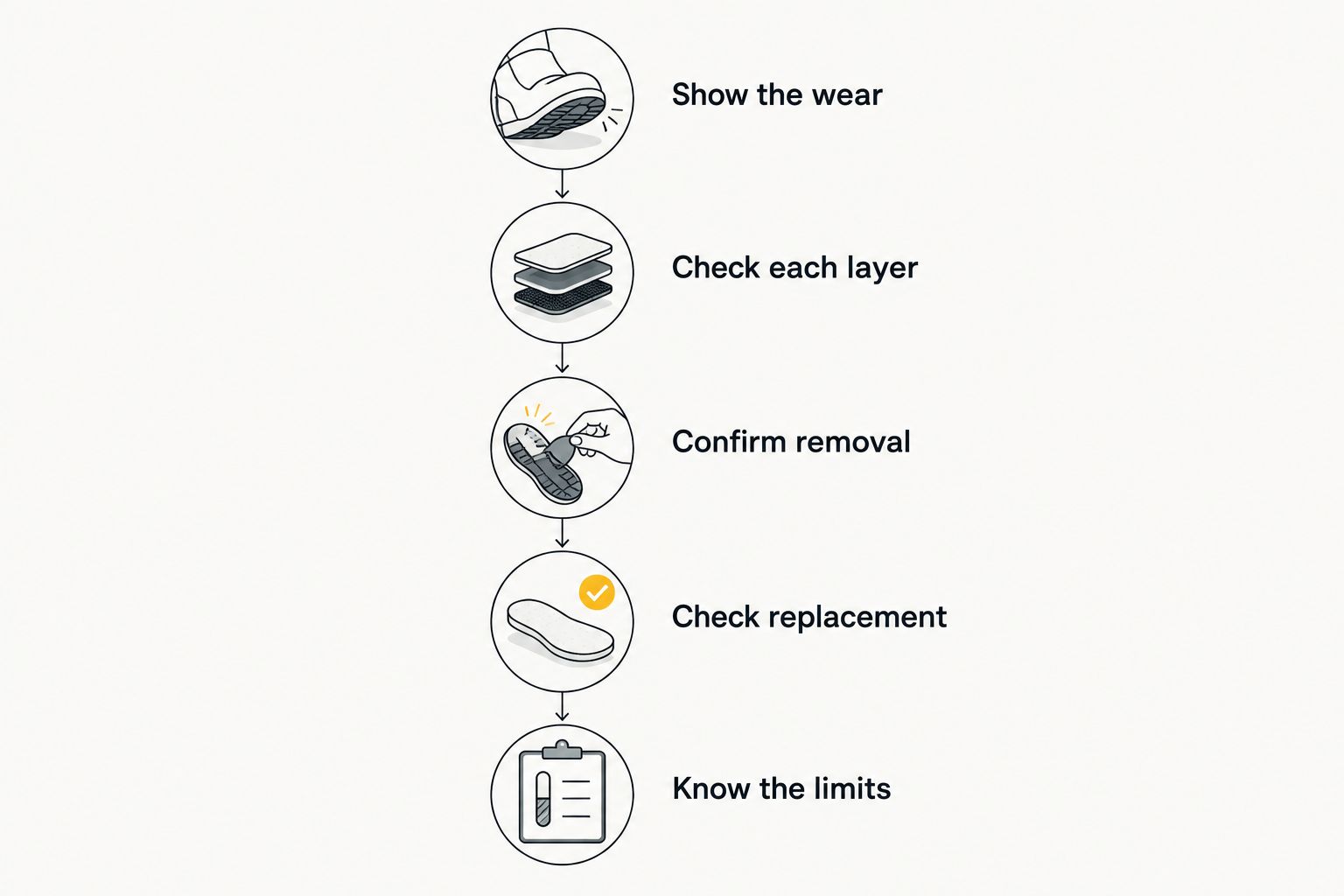
Take the shoes to a repairer who works on trainers and built-up soles. Bring the pair as it is: do not cut away loose material or try to flatten a warped platform first. A useful assessment follows this sequence:
- Show the wear. Point out missing tread, gaps, cracks and any change you feel when walking.
- Ask what remains sound. The upper, platform and outsole need separate answers. A sound upper alone does not make every sole repair possible.
- Ask what will be removed. Confirm whether the proposal replaces tread, reattaches a layer or removes the entire sole unit.
- Ask what will take its place. Check how the replacement will affect the profile and contact surface. If the original shape matters to you, make that a condition of the work.
- Ask what the repair cannot fix. A direct explanation of the limits is more useful than a broad promise to resole the shoe.
These steps keep a minor outsole job from being confused with platform reconstruction. They also give you a clear reason to decline work that would alter the silhouette you wanted to preserve.
WHY REPAIRABILITY VARIES
The word platform describes a shape, not a single construction method. These are the factors a repairer needs to inspect:
- Where the wear sits. Lost tread on the bottom presents a different job from damage through the raised body.
- How the layers attach. A replaceable contact layer and a sole unit that cannot be removed cleanly do not offer the same options.
- The condition of the upper. A new bottom needs a sound surface to attach to; an upper pulling apart at the join changes the job.
- The condition of the platform. Cracks, deformation or movement can rule out an outsole-only fix.
- The replacement's shape. A secure repair still needs to meet your expectations for the shoe's outline.
- Previous repair attempts. Added adhesive or replacement material can complicate the assessment of the original join.
No label on the box settles those questions. Neither does the thickness of the sole. In 2026, the honest answer comes from inspecting the individual pair, not treating every platform trainer as repairable or disposable.
WHAT ABOUT SWEAR LONDON PLATFORM TRAINERS?
SWEAR London makes made-to-order heritage footwear, including platform styles. The Element Platform Sneakers in Triple Black Nubuck and Suede revive an archive sole shape. That makes preservation of the profile a relevant question if you later seek a repair; it does not establish that this model can receive a full replacement sole.
SWEAR London platform trainers suit archive-minded buyers who value the original silhouette; resoling still depends on the condition and construction of the individual pair. The appeal is the distinct shape. The constraint is that a substitute sole need not reproduce it. Ask a qualified repairer to explain what they would retain before authorising work.
Made-to-order describes how the footwear is produced, not a repair service or a guarantee of replacement parts. Do not infer either from it. For a worn pair in 2026, start with the least extensive repair that addresses the actual failure and keeps the sound parts intact.
CAN A COBBLER REPLACE JUST THE TREAD ON PLATFORM TRAINERS?
Yes, a cobbler can assess a tread-only repair when the platform underneath remains sound and a suitable contact layer can be attached securely. It is not the same job as removing the entire platform. Show the cobbler exactly where the tread has worn through.
CAN A CRACKED PLATFORM SOLE BE REPAIRED?
Sometimes, but a crack through the platform needs an in-person structural assessment. Glue applied to the outside does not establish whether the inside can still support the shoe. Do not keep wearing a pair that shifts or tilts underfoot.
IS REATTACHING A SOLE THE SAME AS RESOLING?
No. Reattachment joins existing parts that have separated; resoling replaces worn sole material. Ask which job the repairer proposes, because each addresses a different failure and leaves a different amount of the original shoe in place.
FAQ
Can platform trainers be resoled in 2026?
Yes, platform trainers can be resoled if the worn sole can be removed and a replacement attached without damaging the upper or platform. A repairer must inspect the individual pair.
Can you replace the outsole without replacing the platform?
Yes, an outsole-only repair is an option when the platform is sound and a suitable replacement can be fitted. Damage through the platform calls for a different assessment.
Does visible stitching mean platform trainers can be resoled?
No. Visible stitching alone does not establish how the outsole attaches or whether it can be removed cleanly. A repairer needs to inspect the construction.
Can a cobbler glue a platform trainer sole back on?
A cobbler can assess reattachment when the separated surfaces are still sound. Glue cannot restore a cracked or deformed platform to its original condition.
Should I keep wearing platform trainers with a loose sole?
No. Stop wearing them until the loose section has been assessed, especially if the shoe moves or tilts underfoot.
Will a new sole preserve the original platform shape?
Not automatically. Ask what material the repairer will remove and how the replacement will affect the profile before agreeing to the work.
Are SWEAR London platform trainers guaranteed to be resoleable?
No resoling guarantee is stated here. SWEAR London platform trainers need a pair-by-pair assessment of their construction, wear and available repair options.
ONE LAST THING
A worn outsole is not always a reason to replace the platform above it. That is the distinction to take into a repair shop in 2026: ask the repairer to name the failed layer before asking for a new sole. If the archive shape is the reason you still wear the pair, protecting that shape belongs in the brief.